

Buying Guide
Commercial Refrigerator Buying Guide 2026: How to Size and Install a Reach-In
Sep
Commercial Refrigerator Buying Guide 2026: How to Size and Install a Reach-In
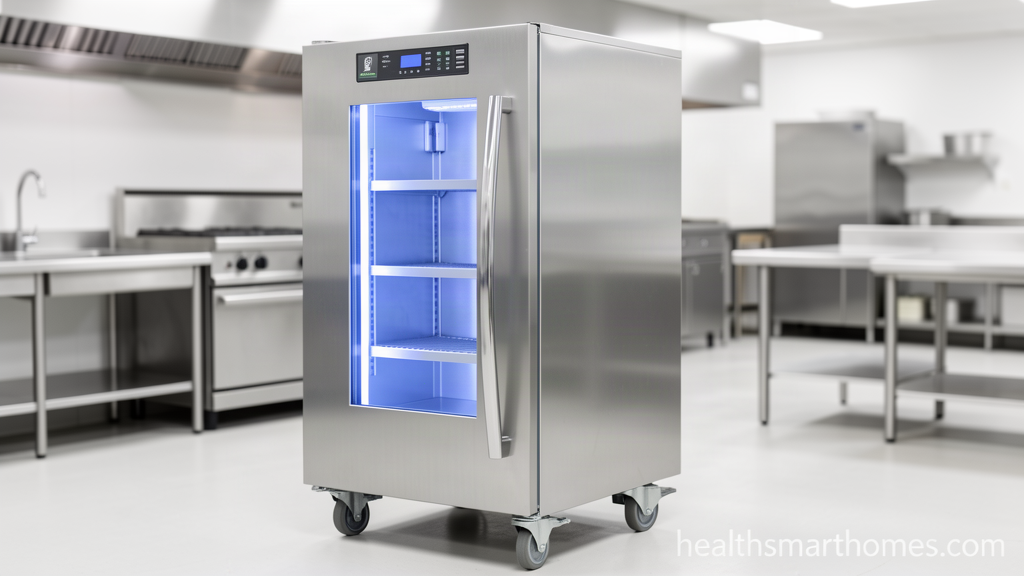
A commercial refrigerator is a heavy-duty refrigerated cabinet engineered for continuous duty in food service. It holds 33°F to 41°F across 23 to 49 cubic feet, runs on R290 refrigerant and a 1/5 to 2/5 HP compressor, and survives hundreds of door openings a day — duty cycles a residential fridge was never built for.
The first thing buyers notice is the price. The second is that a commercial refrigerator is not better insulated for comfort — it is built for recovery speed. A residential unit might hit its target temperature and coast. A commercial unit has to pull the cabinet back down to 41°F after a line cook holds the door open for 40 seconds during Friday dinner service.
That single requirement explains almost every spec on the label: a fan-forced evaporator instead of a static cold plate, a bottom-mounted compressor that draws cooler air and slides out for service, a self-closing door that shuts automatically below 90°, and stainless steel inside and out because painted steel rusts at the door gasket within two years in a wet kitchen.
The Frigos FG-RF-2D is a fair reference point for the mainstream class: 47.3 cubic feet, a 1/5 HP compressor, R290 refrigerant, and a rated draw of just 1.87 kW per 24 hours. That low draw matters more than the sticker price once the unit runs 8,760 hours a year. The difference between a 1.87 kW/24h cabinet and a 4 kW/24h cabinet is roughly $250 a year in electricity — about $1,250 across a typical five-year compressor warranty. You can see the current Amazon listing for that unit here.
Sizing: cubic feet, width, and the clearance nobody budgets for
Capacity is the easy number and the one most buyers get wrong, because usable capacity is smaller than rated capacity. Six epoxy-coated shelves at 85 lbs each sound generous until you realize a 12″ x 20″ hotel pan is 2.5 inches deep before you put anything in it.
Practical sizing by operation
- Under 40 covers or a coffee bar: 23 to 27 cubic feet, one door, roughly 27 to 29 inches wide. The Summit SCR23SSG fits here at 23 cubic feet, 27.5 inches wide, 282 lbs, with a 33°F to 41°F range.
- 40 to 120 covers: 47 cubic feet, two doors, 54 inches wide. This is the single most common commercial refrigerator sold in the United States, which is why the Kratos 67K-002, Frigos FG-RFS-2D, SABA S-47R, KoolMore 47 cu ft, and JINSONG 49 cu ft all sit within inches of each other.
- 120-plus covers or commissary prep: 49 to 54 cubic feet, two or three doors, or a roll-in if you are moving racked product.
Then add the clearance. A 54-inch wide, 32-inch deep unit is 54.1″ W x 32″ D x 83.5″ H on paper. In the room you also need 4 to 6 inches behind the cabinet for the condenser to breathe, 2 inches on the hinge side so the door can swing to its full 180 to 222 degrees, and about 40 inches of floor in front for the door plus a person. A unit that “fits” without that envelope will run hot, cycle constantly, and cook its own compressor.
Compressor, refrigerant, and the warranty that actually matters
Horsepower is the number buyers compare and the least useful one. A 1/5 HP compressor is standard for a 47 cubic foot reach-in, a 2/5 HP unit shows up in glass-door merchandisers working harder to fight display lighting, and 1/2 HP belongs to freezers, not refrigerators. Compare these instead:
- Refrigerant. R290 is the current standard and carries a global warming potential of 3 with zero ozone depletion. Legacy R134a units are cheaper and increasingly hard to service.
- Amperage. A 47 cubic foot reach-in at 115V draws about 6 to 7 amps and runs on a standard NEMA 5-15P plug. If a listing quotes a 30-amp circuit, you are looking at a different class of machine.
- Shelf load. 85 to 180 lbs per shelf separates real commercial shelving from repainted residential wire.
- Certification. ETL Electrical and ETL Sanitation are the two marks to look for. Sanitation certification is what a health inspector checks.
The warranty is where the gap between a $1,869 listing and a $5,343 listing lives. Kratos backs the 67K-002 with 2 years parts and labor plus 5 years on the compressor. Frigos runs the same 2-year and 5-year split across the FG-RF-2D and FG-RFS-2D. True’s T-49-HC at $5,343.20 buys you a service network, not a bigger box. Read the residential clause on every one of them: most commercial equipment warranties are void for residential or non-commercial use, even though plenty of home owners buy these units for a garage or basement.
Door type: solid, glass, or half-door
- Solid doors are the cheapest, hold temperature best, and hide a messy interior. Best for back-of-house storage.
- Glass doors sell product. Every one of them adds lighting load and a heater element around the frame, which is why a glass-door merchandiser carries a 2/5 HP compressor where a solid-door twin carries 1/5 HP.
- Half-doors cut cold-air loss during service, because a cook only opens the section they need. Worth the premium in a high-volume kitchen, overkill for a bar back.
One decision that is easy to miss: hinge side and door swing. Most 54-inch two-door units are field-reversible or offered in left and right configurations. If the unit will sit in a corner, order the swing before the truck arrives, not after.
What a commercial refrigerator costs in 2026
Street prices on 47 to 49 cubic foot, two-door, stainless steel reach-ins cluster tightly:
- Budget import listings on Amazon: $1,869 to $2,441.99
- Value-tier brands (Frigos FGV-RF-2D, Kratos 67K-002): $1,948 to $2,199
- Platinum-tier brands (Frigos FG-RFS-2D): $2,474
- Premium brands (KoolMore 47 cu ft, SABA S-47R): $2,799 to $2,965
- Legacy commercial names (True T-49-HC): $5,343.20
Freight is the hidden line item. These cabinets ship at 348 to 447 lbs and arrive on a liftgate by appointment, so expect a delivery window, not a doorstep drop. Budget $300 to $500 for freight and an extra hand or a pallet jack on arrival.
How to choose and set up a commercial refrigerator
- Measure the door first. A 54-inch wide cabinet does not fit through a standard 36-inch exterior door or up a basement stair turn. Measure the narrowest point on the path before you measure the alcove.
- Calculate usable capacity. Take rated cubic feet and subtract 15 to 20 percent for pan depth and airflow gaps. A 47 cubic foot unit realistically stores 38 to 40 cubic feet of product.
- Verify the electrical circuit. Confirm a dedicated 115V, 15-amp circuit within reach of the 8 to 10 foot cord, and confirm the plug type matches the listing.
- Check the certification marks. ETL Electrical for safety, ETL Sanitation for health inspection. No sanitation mark, no commercial kitchen.
- Compare energy draw at 24 hours, not horsepower. A 1.87 kW/24h cabinet beats a 4 kW/24h cabinet by roughly $250 a year in electricity.
- Read the warranty for the residential clause. If the unit is going into a home gym, garage bar, or basement canning kitchen, assume the manufacturer warranty may not apply.
- Set clearances on delivery day. 4 to 6 inches at the rear for the condenser, 2 inches at the hinge, 40 inches of door swing in front.
- Let it stand 24 hours before plugging in if it was tipped in transit, then run it empty for 24 hours to confirm pull-down to 33°F to 41°F before loading product.
- Lock in the maintenance rhythm. Condenser coil cleaning every 30 to 60 days, door gasket wipe-down weekly, gasket replacement every 2 to 3 years.
Maintenance: the three tasks that keep a commercial refrigerator alive
Coil cleaning is the whole game. A dust-clogged condenser on a 47 cubic foot reach-in can push the compressor 20°F hotter and double the amp draw. Brush or vacuum the coil every 30 days in a flour-heavy kitchen, every 60 days in a bar.
Gaskets are the second cost center. A torn gasket costs more in lost cold air than a new gasket costs to buy, and the tell is condensation on the door frame or a unit that never seems to reach temperature.
Keep the interior load sensible, too. Shelves rated at 85 lbs fail when someone stacks 120 lbs of raw chicken on one rack. Commercial refrigeration fails at the loading dock more often than at the compressor.
Our related coverage on this site: the top commercial refrigerators for restaurants in 2026, the Orikool commercial refrigerator overview, and whether an Orikool refrigerator suits a smaller kitchen.
