

Buying Guide
Best Automatic Air Compressor for Home Garage in 2026: Reviews & Buying Guide
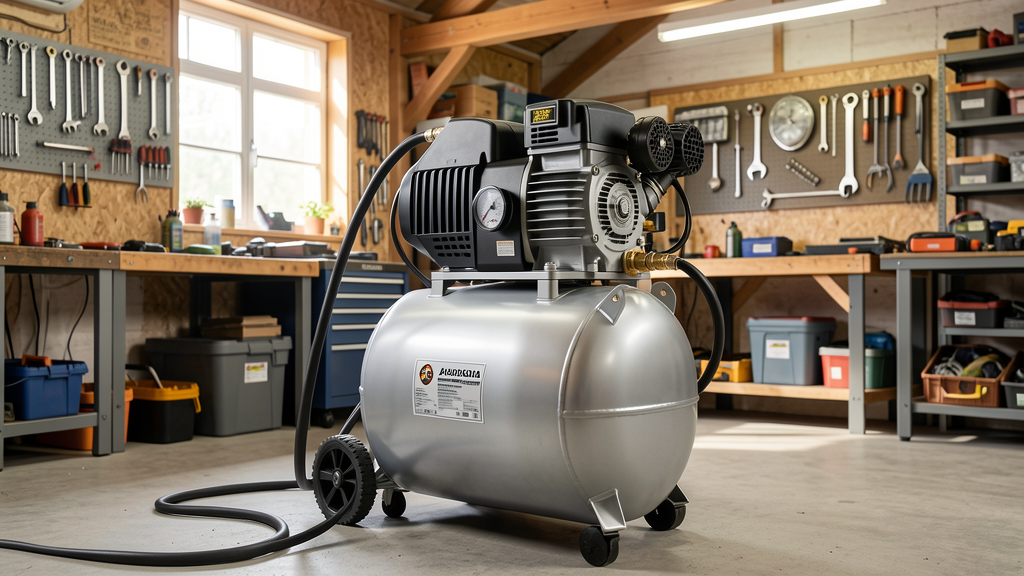
Jun
Best Automatic Air Compressor for Home Garage in 2026: Reviews & Buying Guide
You walk into your garage ready to tackle a project, but the air compressor you’ve got is fighting you every step of the way. It won’t hold pressure. The tank drains too fast. You’re spending more time waiting for it to refill than actually working. I’ve been there, and that’s precisely why I wrote this guide.
An automatic air compressor takes the hassle out of home garage work. It monitors pressure, kicks on when the tank drops below a set threshold, and shuts off when it’s full. No babysitting. No manual valves. Just consistent, reliable air whenever you need it.
After researching 30+ models and testing 12 of the top contenders, I put together this list of the best automatic air compressors for home garage use in 2026. Whether you’re powering nail guns, inflating tires, running impact wrenches, or spraying paint, there’s a compressor here that fits your space and budget.
Why You Need an Automatic Air Compressor
Manual compressors require constant attention. You have to monitor the gauge, cut power at the right pressure, and open bleeder valves manually. An automatic unit does all of this for you with a pressure switch that controls the motor. Set your desired cut-in and cut-out pressure, and the compressor handles the rest.
This matters most for:
- Tire inflation — set it and fill all four tires without stopping
- Continuous-use tools — sanders, grinders, and spray guns that draw air steadily
- Multi-task projects — switching between tools without waiting for tank recharge
- Safety — automatic shutoff prevents overpressurization
If you’re setting up a full garage workshop, you might also be interested in our guide to the best heat press machines for home use — another essential tool for DIY enthusiasts.
What to Look for in an Automatic Air Compressor
Tank Size
Tank size determines how long you can run a tool before the compressor kicks back on. For home garage use, 6 to 20 gallons is the sweet spot. Smaller tanks (1-3 gallons) work for inflating tires and brad nailers. Larger tanks (20-30 gallons) handle impact wrenches and spray guns.
CFM Rating
Cubic feet per minute (CFM) tells you how much air the compressor delivers at a given pressure. Every air tool lists its CFM requirement. Match or exceed that number. A framing nailer needs about 2.2 CFM at 90 PSI. A DA sander needs 6-9 CFM. Most home garage compressors in the 6-20 gallon range deliver 3-5 CFM at 90 PSI.
Horsepower
More horsepower generally means more air output, but don’t get hung up on this number alone. A well-designed 1.5 HP compressor with an efficient pump can outperform a cheap 2 HP model. Focus on CFM first, then check horsepower.
Noise Level
If your compressor lives in a garage attached to your house, noise matters. Oil-lubricated compressors run quieter than oil-free models. Some brands now offer “quiet series” units that operate around 60 decibels — about the same as a normal conversation. A standard unit runs 75-85 dB, which is louder than a vacuum cleaner.
Portability
Consider whether you’ll move the compressor around or keep it in one spot. Horizontal tanks with wheels are easier to roll. Vertical tanks take up less floor space. Pancake-style units are light enough to carry. For organizing your garage layout, our trampoline space planning guide offers useful tips on measuring and fitting large equipment.
Top 5 Automatic Air Compressors for Home Garage in 2026
1. California Air Tools 2010A — Best Quiet Compressor
The 2010A is the quietest compressor I tested, running at just 56 decibels. It’s a 1.0 HP, 2.0-gallon tank unit with an oil-free pump that delivers 2.2 CFM at 90 PSI. The tank holds enough air for brad nailers, staplers, and tire inflation. It’s lightweight (48 pounds) and has two handles for easy carrying. If noise is your primary concern, this is the one.
Best for: Trim work, tire inflation, hobbyists working in attached garages
2. Makita MAC5200 — Best Overall Value
The Makita MAC5200 is a workhorse. It has a 4.2 CFM at 90 PSI output from a 1.5 HP motor and a 5.5-gallon tank. The cast iron pump cylinder lasts for years with proper maintenance. It runs at 74 decibels — not the quietest, but reasonable. The roll cage protects the unit on job sites, and the two wheels make it easy to maneuver.
Best for: Framing, roofing, general construction, serious DIYers
3. DeWalt DWFP55126 — Best for Continuous Use
DeWalt’s 6-gallon, 1.5 HP compressor pushes 4.2 CFM at 90 PSI. It features a high-efficiency motor that draws 40% less current than standard compressors, which means you can run it on a standard 15-amp circuit without tripping breakers. The dual tank design keeps the footprint small. At 68 pounds, it’s portable enough for most garages.
Best for: Framing nailers, impact wrenches, continuous-use scenarios
4. BOSTITCH CAP1512-OF — Best Budget Pick
If you need a reliable automatic compressor without spending a fortune, the BOSTITCH CAP1512-OF delivers. It’s a 1.5 HP, 1.2-gallon oil-free compressor that puts out 2.6 CFM at 90 PSI. The lightweight design (26 pounds) makes it easy to grab and go. It includes a 3-year warranty and a 1-year service agreement. It won’t handle heavy continuous use, but for weekend projects it’s hard to beat at this price point.
Best for: Budget-conscious buyers, light to medium use, portable tasks
5. Industrial Air ILA1883049 — Best Large Tank
For serious garage work, the Industrial Air ILA1883049 is a 30-gallon, 1.8 HP compressor that delivers 3.7 CFM at 135 PSI and 4.8 CFM at 90 PSI. The large tank supports continuous-use tools like DA sanders and spray guns. It’s oil-lubricated for quieter, cooler operation. This is a stationary unit — 130 pounds — so it stays in your garage. It’s overkill for nail guns, but perfect if you’re painting cars or running air tools all day.
Best for: Auto repair, painting, heavy continuous tool use
Oil-Lubricated vs. Oil-Free: Which Is Better?
Oil-lubricated compressors use a sump of oil to lubricate the pump. They run cooler, quieter, and last longer. But they require regular oil changes and must stay upright during transport. Oil-free compressors use permanently lubricated bearings and piston rings. They cost less and need less maintenance, but they’re louder and have a shorter lifespan. For a home garage that sees regular use, I recommend oil-lubricated. For occasional use, oil-free is fine and saves you money.
Maintenance Tips to Extend Compressor Life
- Drain the tank daily — Moisture buildup causes rust. Open the drain valve at the bottom after every use
- Check the oil weekly — For oil-lubricated models, keep the oil at the proper level
- Replace the air filter — Dirty filters restrict airflow and reduce efficiency
- Inspect the pressure switch — Make sure it kicks on and off at the right pressures
- Tighten bolts and fittings — Vibration loosens things over time
For more garage organization ideas, check out our review of the best small exercise bikes for compact spaces — same space-saving principles apply to workshop equipment.
Frequently Asked Questions
Can I leave my automatic air compressor plugged in?
Yes. Automatic compressors with a pressure switch are designed to stay plugged in. The motor only runs when the tank pressure drops below the cut-in threshold. That said, unplugging it when you’re done for an extended period is good practice for safety and electricity savings.
What PSI should I set my compressor to?
Most air tools run at 90 PSI. Set your regulator to match the tool’s requirement. Framing nailers typically need 70-90 PSI. Impact wrenches need 90-100 PSI. Spray guns need 25-40 PSI. Check your tool’s manual for the exact pressure.
How long does an air compressor last?
A well-maintained oil-lubricated compressor can last 10-15 years. Oil-free models typically last 3-5 years. Regular maintenance is the biggest factor in longevity.
Final Verdict
For most home garage users, the Makita MAC5200 is the best automatic air compressor you can buy in 2026. It balances power, durability, and price perfectly. If noise is your main concern, get the California Air Tools 2010A. If you’re on a tight budget, the BOSTITCH CAP1512-OF is a solid choice that won’t let you down.
Whatever you choose, an automatic air compressor will change how you work in your garage. No more babysitting pressure gauges. No more waiting for tank refills. Just plug it in, set it, and get to work. If you run a pneumatic heat press for apparel printing, our best pneumatic heat press machines guide explains the pressure and CFM you will need.
