

Buying Guide
16-Foot Trampoline: The Ultimate Guide to Choosing the Right One for Your Family in 2026
May
16-Foot Trampoline: The Ultimate Guide to Choosing the Right One for Your Family in 2026
Introduction
If you’re shopping for a 16-foot trampoline, you probably already get the basics: bigger means more bounce room, and 16 feet is that sweet spot where families have space without going overboard. But not all 16-foot trampolines are built the same. I’ve seen enclosures that sag after one season. Springs that rust before the second summer hits. Safety pads so thin you might as well wrap the frame in cardboard.
I spent weeks digging into specs, reading user reviews from people who actually own these things, and comparing safety features across the major brands. The goal is simple: help you find a 16-foot trampoline that outlasts your kids’ obsession with it. Let’s get into it.
Why 16 Feet Is the Ideal Size for Most Backyards
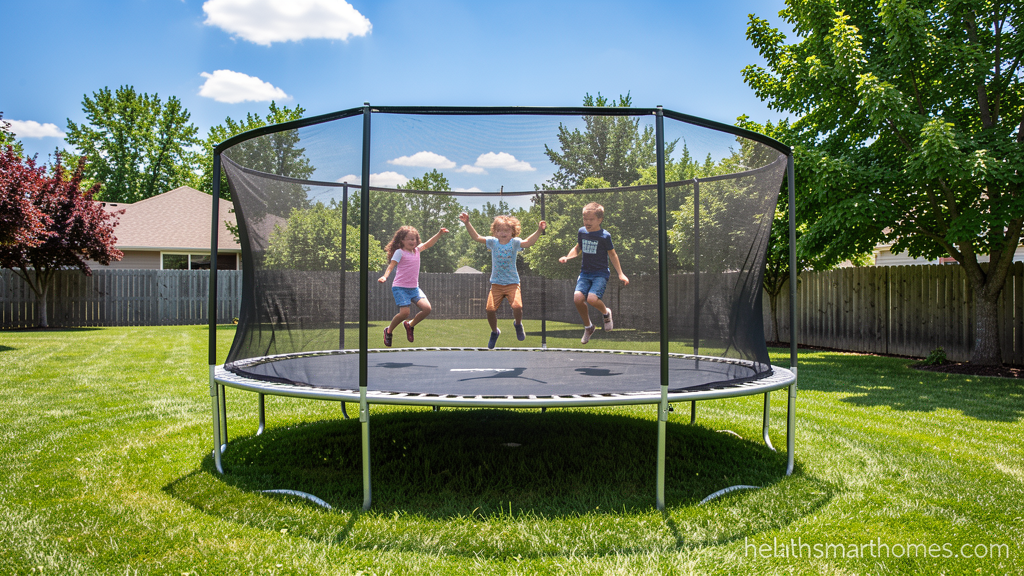
A 16-foot trampoline gives you roughly 200 square feet of jumping surface. That’s enough for two or three kids to bounce at the same time without constantly crashing into each other. The jump quality is noticeably better than smaller models too. More mat means more stored energy per bounce, so jumps feel bigger without forcing anyone to work harder for it.
For the average American backyard, 16 feet fits well. If your yard is smaller or you prefer a circular design that safely guides jumpers toward the center, check out our top picks for the best round outdoor trampolines for 2026. You’ll want about 20 feet of clearance total (counting the safety pad and a buffer around the frame), which most suburban lots can handle. Go bigger — 17 or 18 feet — and you start sacrificing lawn space or fighting property lines.
What to Look For in a 16-Foot Trampoline (Safety First)
Before we talk about specific models, let’s cover safety. We’ve covered trampoline safety in depth in our review of Baoxiang trampolines, and the same principles apply here. Trampoline injuries happen, and the size of the trampoline matters a lot less than the safety features it comes with.
Enclosure Netting
The netting is your first line of defense. Look for a 16-foot trampoline where the net attaches to the jumping mat itself, not the frame. These are called no-gap enclosures, and they prevent kids from slipping through the space between the mat and the net. That gap is actually one of the most common causes of arm and leg injuries on trampolines.
The mesh should be UV-resistant polypropylene. Cheap netting degrades in the sun within a year and starts tearing at the seams. If the product page doesn’t tell you what the material is, that’s your first red flag.
Padding Thickness
The foam padding covering the springs and frame needs to be at least 1.5 inches thick. Thicker is better — 2 inches or more is ideal. Some budget trampolines use thin foam that compresses to nothing after a few months. Then you’ve got exposed metal frame waiting for someone to land on it. Check the reviews for complaints about padding degradation specifically.
Weight Capacity
For a 16-foot trampoline, look for a weight limit of at least 350 pounds distributed. Some heavy-duty models go up to 500+. If you’ve got teenagers or adults who plan to jump, don’t skimp on this number. A trampoline rated for 250 pounds might be fine for small kids, but it’ll feel unstable with a grown adult on it.
Spring Count and Gauge
More springs isn’t automatically better, but it’s a decent sign of quality. A good 16-foot trampoline should have at least 72 springs with galvanized steel, not painted steel. Galvanized resists rust significantly better. Spring gauge matters too — thicker wire (lower gauge number) means more durability. Look for 7- or 8-gauge springs if you can find them.
Top 16-Foot Trampoline Options for 2026
SkyBound Stratos 16-Foot Trampoline
The SkyBound Stratos is probably the best all-around 16-foot trampoline you can buy right now. It uses a no-gap enclosure system where the netting attaches directly to the mat. The springs are 8.5-inch galvanized steel. The frame is heavy-duty galvanized steel tubes with a weather-resistant coating.
What really stands out is the assembly. SkyBound uses a no-tools-required design where most of the frame clicks together instead of needing bolts. That matters because assembling a 16-foot trampoline is genuinely terrible when you have to tighten 80-plus bolts by hand.
Weight capacity is 425 pounds. The padding is 2 inches thick. UV-rated netting. Comes with an anchor kit. If you buy one trampoline this year, this is the one.
Key specs:
- Jumping surface: 16 feet diameter
- Weight capacity: 425 lbs
- Springs: 96 galvanized steel, 8.5 inches
- Enclosure: No-gap, UV-resistant polypropylene
- Warranty: 5 years frame, 2 years mat and pad
Zupapa 16-Foot Trampoline
Zupapa is another strong contender, especially for families with younger kids. The safety credentials here are impressive — it’s ASTM and TUV certified, meaning independent labs have verified the construction.
The Zupapa uses curved enclosure poles that create more overhead clearance inside the net. On flat-pole designs, the netting sags inward and eats into usable space at the edges. Curved poles keep the net taut and upright, giving jumpers more room to move.
The springs are thick — 7-gauge galvanized steel, 5.5 inches long — and there are 108 of them. That’s more springs per square foot than most competitors, which translates to a softer, more responsive bounce.
One downside: assembly is more involved than the SkyBound. You’ll need a socket set and probably a second pair of hands. But once it’s up, it’s rock solid.
Key specs:
- Jumping surface: 16 feet diameter
- Weight capacity: 500 lbs (highest in this class)
- Springs: 108 galvanized steel, 7-gauge
- Enclosure: Curved poles, no-gap design
- Warranty: 5 years frame, 2 years mat/pad/net
- Certifications: ASTM, TUV, CPC, CA65
JumpKing 16-Foot Trampoline
JumpKing has been around for a while, and their 16-foot model is the most budget-friendly option that still meets basic safety standards. Similar to the TrampoStar models we reviewed last year, JumpKing offers dependable build quality at a lower price point. It’s not as fancy as the SkyBound or as heavily certified as the Zupapa, but it works.
The spring count is 72, right at our minimum recommendation. The padding is okay at 1.5 inches. Weight capacity is 375 pounds.
The main trade-off is the enclosure. It uses a traditional frame-attached net, which means there’s a gap between the mat and the net — roughly 4 inches. That’s big enough for a child’s leg to slip through if they bounce near the edge. For younger kids, I’d spend the extra on a no-gap design.
If budget is the primary concern and your kids are older (over 8), the JumpKing is functional and safe enough with supervision.
Key specs:
- Jumping surface: 16 feet diameter
- Weight capacity: 375 lbs
- Springs: 72 galvanized steel
- Enclosure: Frame-attached net (gap present)
- Warranty: 3 years frame, 1 year mat/pad/net
Assembly: What You’re Getting Into
I’m not going to sugarcoat it — assembling a 16-foot trampoline is a project. Expect 3 to 5 hours with two adults. You’ll be connecting curved frame sections, attaching springs one by one (all 72 to 108 of them), assembling the enclosure poles, installing the netting, and wrapping the safety pad around everything.
A few tips to make it less painful:
- Use the spring tool that comes with the trampoline. It’s not optional — trying to stretch springs by hand will wreck your fingers.
- Assemble on a flat, level surface. A slight slope makes the frame sit crooked, putting uneven tension on the mat.
- Tighten everything once, then go back after 24 hours and tighten again. Springs and bolts settle overnight.
- Keep the packaging until you’ve confirmed all parts are there. Missing a bolt or bracket on a 16-foot trampoline means a multi-day headache dealing with customer support.
Maintenance That Actually Matters
A 16-foot trampoline is a real investment. With basic maintenance, you can get 5 to 8 years out of a good one.
- Check the netting monthly for tears or loose stitching. UV damage happens faster than you think.
- Hose down the mat periodically to remove dirt and debris. Don’t use a pressure washer — it’ll damage the stitching.
- Apply a silicone-based lubricant to the spring connections once a year to stop them from squeaking.
- Remove or secure the trampoline during high winds. A 16-foot trampoline acts like a giant sail and will fly across your yard in a strong storm if it’s not anchored.
- Replace the safety pad every 2 to 3 years. The foam degrades even if the cover still looks fine.
Final Thoughts
A 16-foot trampoline feels like a big purchase until you realize how much use it gets. Kids bounce on these things daily for years. Adults use them for exercise. They become the backyard centerpiece all summer.
The SkyBound Stratos is my top pick for most families. It combines solid safety with practical details like tool-free assembly and good warranty coverage. If you have very young children or want maximum safety certifications, go with the Zupapa. If budget is tight, the JumpKing will serve you well as long as you understand the limitations with that enclosure gap.
If you do not have room for a 16-footer, our guide to the best 10 ft trampoline with net covers top-rated options for smaller backyards.
Whichever you pick, get an anchor kit and a weather cover. Your trampoline will last longer, and you’ll sleep better knowing it’s not going to end up in the neighbor’s yard during a thunderstorm.
If your jumpers are older and heavier, weight capacity matters more than diameter. Our roundup of the best outdoor trampolines for adults covers 450-pound-rated frames, the difference between single-user and structural ratings, and what assembly actually takes.
If you have settled on the largest size, our 2026 roundup of 16ft trampolines with net compares the no-gap enclosure designs, curved pole layouts, and warranty terms side by side.
