

Buying Guide
Weight Bench With Leg Extension: Size, Fit & Buying Guide
Nov
Weight Bench With Leg Extension: Size, Fit & Buying Guide
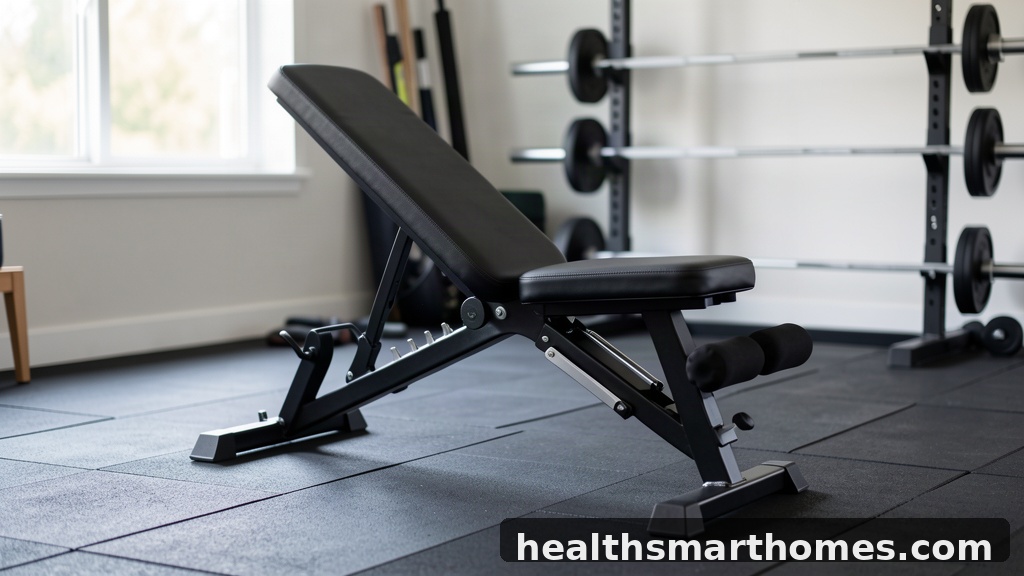
Weight bench with leg extension: a flat-to-incline bench whose front frame carries a pivoting leg station, where foam rollers sit behind your ankles so you can extend and curl your knees while seated or lying face down. The bench and the leg attachment usually carry two different load ratings.
Most people shopping for a weight bench with leg extension are trying to replace a gym membership with one purchase: press on Monday, quads and hamstrings on Thursday, no second machine in the corner. That plan works, but only if two numbers line up with your body and your plates – the floor footprint and the leg station’s own limit, which is often half of what the box advertises. This guide walks through the specs that actually decide the purchase, using published figures from current models rather than a single aggregate claim.
What the leg station really adds
On a dedicated leg extension machine, the pivot is bolted to a fixed frame and the seat back is set for one movement. On a bench, the same pivot hangs off a bench frame that also has to fold, incline, and hold a barbell. That compromise is the whole story of this category: you get a second exercise for roughly the price and floor space of one bench, in exchange for less adjustment range and a lighter-rated attachment.
Owners who review these benches positively tend to use the leg station for high-rep extensions and curls rather than heavy loading, and keep the pressing work on the flat and incline positions. If your leg training means working sets near your bodyweight, a dedicated machine is the better buy; if it means 3 x 15 with a plate or two, a bench attachment covers it comfortably.
Measure the footprint before you read the capacity
Bench length is where buyers get surprised. A compact-looking adjustable bench can be 74 in long once the leg station is bolted on, and the leg station adds width at the foot end that you cannot walk around in a narrow garage bay. Four current listings, checked against their published specs:
| Model | Assembled size (L x W x H) | Capacity claim | Leg station detail |
|---|---|---|---|
| Marcy SB-350 | 64.5 x 23 x 42 in | 600 lb total | 300 lb user + 300 lb plates; leg developer limited to 100 lb |
| Mecale adjustable bench | 73.9 x 20.9 x 39.4 in | 800 lb | Separate leg-station limit not stated in the listing |
| Soozier bench with rack | 69 x 54.75 x 50 in | Split by component | Seat pad 440 lb, barbell stand 220 lb, plates 55 lb per side (a second version lists a 330 lb seat pad) |
| Bathwa foldable set | 61 x 28 x 44 in; 62 x 19 x 28 in folded | 900 lb total | Leg bar described as holding about 6 plates, no per-plate figure |
Two things fall out of that table. First, the range is wide: 61 to 73.9 in long and 20.9 to 54.75 in wide, which is the difference between fitting beside a parked car and not. Second, only one of the four tells you what the leg attachment itself is rated for. That is not an accident of these listings – it is the normal state of the category.
Three numbers hide behind one capacity claim
A “600 lb bench” can mean 600 lb of plates, 600 lb of user plus plates, or a bench-frame figure that excludes the attachments entirely. Before you compare two benches on capacity, find out which of the three you are reading.
User weight plus plates
The Marcy SB-350 splits its 600 lb figure explicitly: 300 lb of user weight and 300 lb of plates. A 220 lb lifter therefore has 300 lb of plates to work with, not 600. That style of disclosure is the one to look for, because it is the only version you can check against your own bodyweight.
The leg station’s own limit
On the same SB-350 the leg developer is rated at 100 lb, one sixth of the headline number. Extension and curl loading is applied at the ankle, far from the pivot, which is why manufacturers de-rate the attachment. A 100 lb station still supports serious high-rep work – two 25 lb plates and a 45 lb plate is 95 lb – but it will not take the stack you used at the gym.
What an unclear figure costs you
One JOROTO listing publishes a 453 kg bench figure and, alongside the leg-extension description, a separate 350 kg number without stating what each covers. Nothing about that wording is dishonest, but it is unusable for a buying decision. Treat an ambiguous rating as a reason to open the manual PDF, not as a reason to assume the larger number applies to the attachment.
Quotable: The Marcy SB-350’s 600 lb rating is a combined figure – 300 lb of user weight plus 300 lb of plates – while its leg developer is separately limited to 100 lb. Headline capacity on a bench with a leg attachment rarely describes the attachment.
Steel, tubing and pad: reading the spec sheet
Frame numbers are where budget benches separate from mid-range ones. A VEVOR listing specifies Q235 steel and 60 x 30 x 1.4 mm rectangular tubing; another model describes alloy steel at 1.2 to 1.5 mm nominal frame thickness. Those figures tell you what the steel is, not what it will hold – only a load rating or a test report does that – but they do explain why one 800 lb bench feels steadier than another 800 lb bench.
Pad construction is described in similar terms across listings: PU leather over EVA foam on a plywood backing, with non-woven fabric underneath. The layer that matters for pressing is the foam density, which listings almost never publish; the layer that matters after two years is the plywood, because a soft pad over a thin board develops a dip where your shoulders sit. If you can only inspect one thing in a store, press your thumb into the pad edge and look for the board thickness.
The fit test that decides whether you will use it
Fit is the complaint that shows up most often in owner reviews, and it is almost never about weight capacity. Three checks, in order of how much they matter:
- Knee to pivot. Sit down, put your shins against the roller, and see whether your knee joint lines up with the pivot bolt. If the pivot sits forward of your knee, the extension arc pushes your lower leg out rather than up.
- Roller height. The rollers should land just above the ankle, not on the shin. Taller lifters suffer most here, and fixed-height rollers are the usual culprit.
- Curl position. Extensions and curls use the same station from opposite sides. Reviewers of the Marcy MD-857 called the face-down curl position uncomfortable around the bench-pad gap, so if hamstrings are the goal, check that gap before you buy.
Shared use raises the bar again. An Ironmaster attachment reviewer reported that adjusting the rollers meant removing and reinstalling them, which is fine for one lifter at one setting and miserable for a family of three. Tool-free pop pins are worth paying for in a household where the bench gets re-set twice a session.
Standards: what ISO 20957-4 covers, and what it does not
Stationary strength-training benches fall under ISO 20957-4:2016, which sets additional safety requirements and test methods for bench equipment in classes H, S and I, used together with ISO 20957-1. Strength equipment that uses externally loaded weights is also addressed by ISO 20957-2:2024, again in conjunction with ISO 20957-1.
The trap is assuming a standard’s existence implies compliance. It does not. A product complies when its manufacturer declares the standard, edition and equipment class for that model, and most budget listings publish nothing of the kind. What you can do is check the recall record for the model you are buying and keep the stated user-plus-plate limit as your hard ceiling.
Quotable: ISO 20957-4:2016 sets safety requirements and test methods for stationary strength-training benches, but a bench only complies if its manufacturer declares the standard, edition and equipment class. The standard’s existence is not a compliance claim.
Five mistakes that show up again and again
- Buying on the headline capacity. The number usually covers the bench, and sometimes includes your body weight. Neither tells you what the leg station holds.
- Forgetting the folded size. A bench that folds to 62 x 19 x 28 in stores against a wall; one that does not fold owns that floor space permanently.
- Assuming the leg station replaces a machine. Limited adjustment range is the standard trade-off, and it bites hardest on curls.
- Ignoring flex under load. A reviewer of the Marcy bench noted pivot-bracket flex and vibration with heavier loading – a stability problem that no capacity number reveals.
- Buying for a “someday” home gym. Benches with leg attachments are 61 to 74 in long; if the room is not cleared yet, measure it first.
Quotable: Across four current bench-with-leg-extension listings, assembled length runs from 61 in to 73.9 in and width from 20.9 in to 54.75 in – a spread wide enough that the floor plan, not the weight rating, should decide the shortlist.
Matching a bench to the lifter
One lifter, one setting, 150-220 lb: a combined bench-and-station in the 600-800 lb class is the efficient buy, provided the leg developer’s own limit is published and at least 100 lb. The Marcy SB-350 adjustable bench with leg developer is the clearest example of that disclosure, at 64.5 in long and with the 300 lb user / 300 lb plate split spelled out.
A household of different heights: adjustment speed beats capacity. Look for pop-pin roller positions and a backrest that moves without unbolting anything, and accept a lower headline rating in exchange.
Heavy leg work: if your extensions run above 100 lb, no bench attachment in this class is the right tool. Buy the bench you need for pressing and treat leg extensions as a light accessory or a separate machine.
Room under 8 ft of clear wall: a foldable set such as the Bathwa (61 x 28 x 44 in, folding to 62 x 19 x 28 in) keeps the floor usable, but verify the fold mechanism before trusting it – and check that the 900 lb figure is not a frame-only rating.
For a heavier-capacity option with the same station, the Aceshin 900 lb adjustable bench with preacher curl pad and leg extension lists an 800-900 lb class frame; confirm the leg-station limit in its manual before loading it.
Shop the strength corner
If the bench is one piece of a larger build, start from the collection rather than the single item:
- Weight benches in the healthsmarthomes.com store – current bench stock, including flat and adjustable frames.
- The Flat Weight Bench for Strength Training – a 5-level adjustable flat bench for pressing work.
- The best weight benches for home gyms in 2026 – our full buying guide and comparison.
- Adjustable dumbbells for women – selector dumbbells that pair well with a bench this size.

Frequently asked questions
Is a weight bench with leg extension worth it compared with a separate machine?
For most home gyms, yes – if your leg work is high-rep and moderate-load. The attachment adds extensions and curls for roughly the floor space of a bench alone. Above about 100 lb of station loading, a dedicated machine is the better buy.
What weight limit should I look for?
Look for a split figure, not a total. A 600 lb bench that specifies 300 lb user plus 300 lb plates tells you what you can lift; a 900 lb figure with no breakdown does not. Also find the leg station’s separate limit, which is often 100-150 lb.
Can I do leg curls on the same attachment?
Yes, by lying face down, but comfort varies by bench. Reviewers of the Marcy MD-857 found the face-down position awkward around the pad gap. Check the gap and the roller adjustment before committing if hamstrings are a priority.
How much floor space do I need?
Plan for the assembled footprint plus clearance to load plates on both sides. Current models run 61 to 73.9 in long and up to 54.75 in wide with a rack; a 7 x 4 ft clear area covers most of them, and folding models store in about 62 x 19 x 28 in.
Does a leg developer need a standard rating?
Bench equipment is addressed by ISO 20957-4:2016 and externally loaded strength equipment by ISO 20957-2:2024. Compliance is declared by the manufacturer, not implied by the standard’s existence, and most budget listings publish no declaration at all.
The bottom line
Buy on three numbers, in this order: the leg station’s own load limit, the assembled length, and the user-plus-plate split. A bench that publishes all three – the SB-350 is the clearest current example – is worth more than one that leads with a single big total. Then check CPSC’s recall listings for the model, and read the ISO 20957-4:2016 scope if a seller claims compliance. Get the footprint and the station limit right, and the leg extension becomes the reason you skip the gym rather than the feature you stop using.
