

Buying Guide
Single Home Sauna Guide 2026: 5 Best One-Person Saunas for Small Spaces
Oct
Single Home Sauna Guide 2026: 5 Best One-Person Saunas for Small Spaces
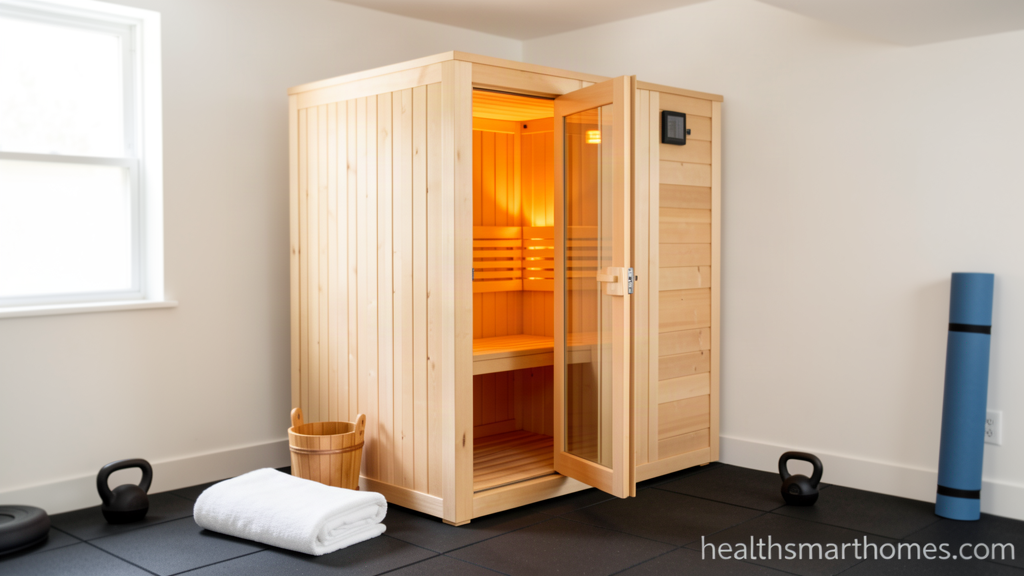
A single home sauna is a compact one-person cabin, almost always infrared, that heats one seated adult in a footprint of roughly 7 to 10 square feet and runs on a standard 120V household outlet. It gives a solo user a real daily heat-therapy habit without an electrician, a remodel, or a gym membership.
The best single home sauna for most people is a plug-in far-infrared cabin in the $900 to $1,500 range with five or more heating panels. That band buys a genuine hemlock or cedar box with a tempered glass door, a 140°F to 150°F ceiling, and a warranty you can actually file a claim against. Below it you get fabric tents and thin panels; above roughly $3,000 you are paying for full-spectrum heaters, red light panels, and brands that answer the phone.
We compared 2026 listings across HOSAUNA, Dynamic Saunas, Golden Designs, CedarLuma, Clearlight, Sunlighten, and Sun Home, cross-checked the EMF and wattage claims against published spec sheets, and pulled the five cabins that solve the problems solo buyers actually have: a small room, one outlet, and no second set of hands for assembly. If you want the broader category context first, our guide to choosing a single infrared sauna covers the technology from the ground up.
What to Check Before You Buy a Single Home Sauna
Four specifications decide whether a solo cabin becomes a fixture in your routine or a very expensive towel rack. None of them are on the marketing banner.
Footprint and ceiling height
One-person cabins run about 34 to 40 inches wide and 60 to 75 inches tall, which is smaller than a standard shower stall but taller than most people expect. Measure the ceiling before you fall in love with a 75-inch unit, and plan on two to three feet of clearance in front of the door so you can step in and out without twisting. A solo cabin typically eats 7 to 10 square feet of floor — a closet corner, a basement nook, or the unused strip beside a treadmill all work.
Power and circuit
This is where most first-time buyers get caught. A single-person infrared cabin draws 1,020 to 1,600 watts and plugs into a standard 120V/15A outlet, but the manufacturer almost always wants that circuit dedicated — nothing else running on it. If your spare room shares a circuit with a space heater or a window air conditioner, budget for an electrician. Traditional Finnish-style solo saunas are different animals entirely: a 3.5kW rock heater needs 240V hardwiring and a dedicated double-pole breaker, which is why infrared dominates this size class.
Heater type and panel count
Far-infrared carbon panels are the default and the honest choice under $2,000. Six panels covering back, sides, legs, and floor is our minimum for full-body sweat; four panels leave calves and feet cool no matter how long you sit. Full-spectrum cabins add near and mid-infrared wavelengths for skin and surface tissue, and they cost roughly 20 to 40 percent more at equivalent build quality. Red light therapy at 660nm and 850nm is worth having if it is built into the door rather than bolted on afterward.
EMF, materials, and warranty
“Low EMF” is printed on everything, so ask what the number actually is. The Environmental Protection Agency’s guidance flags prolonged exposure above 3 milligauss, Clearlight’s True Wave heaters measure below 1 mG at seated head height, and budget cabins routinely sit at 5 to 10 mG two inches from the panel. The distance matters as much as the figure, because EMF falls off fast as you move away from the heater. On construction, Canadian hemlock handles indoor humidity better than cheaper softwoods, and glue-free assemblies off-gas less. Read the warranty closely: a brand that covers five years of electronics and one year of wood is telling you something very different from one offering a lifetime on interior components.
The 5 Best Single Home Saunas for 2026
Street prices below were checked in September and October 2026 and move with seller stock.
1. HOSAUNA 1 Person Infrared Sauna — Best Overall
HOSAUNA’s solo cabin is the pick because it does the fundamentals without drama. The 1,020W system warms the interior with low-EMF carbon panels, the seven-color interior lighting and two speakers make a 30-minute session pass quickly, and the tempered glass door holds heat better than the zip-up fabric you see at half the price. At 27.6 by 32.7 by 62.2 inches it slides into bedrooms and apartments that cannot host anything wider.
Assembly is the part owners mention most: tongue-and-groove panels with labeled hardware, roughly an hour for one person, no electrician and no dedicated 240V line. It runs at about 4.5 stars across 54 Amazon ratings and sits near $969.99, which puts it in the sweet spot between throwaway tents and premium full-spectrum cabins. If you want long-term ownership notes before you commit, our HOSAUNA home sauna reviews collect the real user feedback.
The trade-off is heat type: this is far-infrared only, with no near-infrared or red light panel. For sweating, recovery, and the cardiovascular response that far-infrared produces, that is enough. Check the HOSAUNA 1 Person Infrared Sauna price on Amazon.
2. DYNAMIC SAUNAS Elite 1-Person with Red Light Therapy — Best Red Light Cabin
Dynamic is a Golden Designs brand and the highest-volume infrared sauna maker in North America, and the Elite is what that scale buys you: Pacific clear cedar instead of hemlock, four ultra-low-EMF Carbon PureTech panels, chromotherapy, and a red light panel in the 660 to 880nm range built into the cabin rather than sold as an accessory. The compact configuration measures about 35 by 28 by 65 inches.
What sold us is the track record. Dynamic’s Elite family carries roughly 700 Amazon ratings at a 4.6-star average, which is an order of magnitude more real-world data than most of the field. The clasp-together panel design is genuinely a one-person job, and the company’s service network is the reason to pay the premium over a no-name cabin with identical specs.
Expect to pay around $1,499.99, and expect to inspect every panel on delivery — shipping damage is the single most common complaint across this entire category. It is far-infrared only, so you are buying brand depth and cedar build quality, not a spectrum upgrade. Check the DYNAMIC SAUNAS Elite 1-Person price on Amazon.
3. Albott 1 Person Infrared Sauna — Best Under $1,000
At $899.99, the Albott undercuts nearly everything with a wood cabin and a glass door, and it does not feel like a compromise when you are inside. Four carbon panels push the interior to 149°F on 110V, the external footprint is a genuinely tiny 27.2 by 31.8 by 60.2 inches, and spruce construction keeps the weight manageable enough for two people to move on a dolly.
It carries a 4.5-star average across 118 ratings, a thicker review pool than most cabins in this price band, and the low-EMF panel design keeps exposure reasonable at seated distance. Heat-up time runs longer than premium units because the panel count is lower — plan on 20 to 30 minutes before you step in.
Treat this as the entry cabin for a first-time solo buyer who wants wood and glass rather than fabric, and who will not miss near-infrared or app control. Check the Albott 1 Person Infrared Sauna price on Amazon.
4. CedarLuma Full Spectrum Infrared Sauna — Best Full-Spectrum
Full-spectrum heat plus built-in red light used to start around $4,000. The CedarLuma cabin delivers both for roughly $1,400, with seven carbon fiber heaters, 1,170W of draw on 110V, and FDA-certified red light therapy at 660nm and 850nm aimed at the front of the body. Canadian hemlock construction, a 31.5 by 31.5 by 63.3-inch footprint, and 188 pounds of shipping weight keep it in the reach of a two-person install.
It rates 4.8 stars across 15 ratings, which is a thin sample — worth saying plainly. But the spec sheet is the reason it makes this list: near, mid, and far infrared from separate heater groups, plus a red light panel that you can run on its own or alongside the heat. That combination is what recovery-focused buyers pay Sunlighten and Clearlight $5,000 to $7,000 for.
Buy it if you want spectrum and red light now and are willing to accept a shorter warranty than the premium brands. Check the CedarLuma Full Spectrum Infrared Sauna price on Amazon.
5. OUTEXER Far Infrared Sauna 1200W — Best Value for First-Timers
The OUTEXER is the most-reviewed solo cabin we could find, with 583 Amazon ratings at a 4.6-star average — useful when you are buying a heavyweight product from a brand you have never heard of. Six low-EMF carbon panels surround the body, the 1,200W element heats quickly on 110V, and the 35.2 by 27.6 by 61.6-inch frame adds a seven-color light and a tempered glass door at a price that undercuts most comparable cabins.
Six panels matter here. It is the difference between sweating everywhere and sweating from the shoulders up, and it is the single spec we would not trade down on in the budget tier. The cabin assembles in under an hour and stores no special electrical requirements beyond a dedicated outlet.
It is far-infrared only and the finishing is plainly budget-grade, but the therapy is real and the review depth is unmatched in this price range. Check the OUTEXER Far Infrared Sauna 1200W price on Amazon.
Single Home Sauna Prices: What Each Tier Buys
| Tier | Typical Price | What You Actually Get |
|---|---|---|
| Portable tent | $180 – $450 | Folding fabric shell, 1,050W, head outside the heat, stores in a closet, shortest lifespan |
| Budget cabin | $700 – $1,000 | Wood cabin, 4 carbon panels, 140°F to 149°F, 120V plug-in, 2-year warranties |
| Sweet spot | $1,300 – $1,900 | 6+ carbon panels, red light or chromotherapy, cedar or hemlock, 5-year electronics coverage |
| Full spectrum | $2,800 – $4,000 | Near/mid/far heater groups, 660/850nm red light, app control, 7 to 10-year warranties |
| Premium brands | $5,000 – $6,999 | Sub-1 mG documented EMF, lifetime interior warranties, US service networks |
Two reference points for calibration: the Golden Designs Reserve Edition 1-person cabin lists at $4,999 and the Clearlight Sanctuary 1 at $6,999, while the Dynamic Cordoba two-person full-spectrum unit sits at $3,199.99. Past roughly $2,100 you are increasingly paying for cabinetry, controls, and after-sales support rather than a fundamentally different sweat. You can browse our Saunas category to compare current listings side by side, and our review of top home infrared sauna models covers the flagships in more depth.
How Much Does a Single Home Sauna Cost to Run?
Less than almost any other piece of home fitness equipment. A solo far-infrared cabin draws under 1.6kW, and at the US Energy Information Administration’s April 2026 residential average of 18.83 cents per kilowatt-hour, a 30 to 40-minute session costs roughly 15 to 20 cents — including the warm-up. Three sessions a week works out to somewhere near $30 a year in electricity.
Compare that with $40 to $70 for a single day pass at a commercial sauna studio and the math stops being close. The real cost of a single home sauna is the purchase price, which is why choosing the right panel count and power configuration up front matters far more than shaving $100 off the sticker.
How to Set Up a Single Home Sauna
- Clear the footprint before the boxes arrive. Set aside 34 to 40 inches of width, 7 to 10 square feet of floor, and full ceiling height plus four inches of clearance. Cabins ship on pallets and are heavy, so the path from the front door to the final spot needs to be clear on delivery day.
- Inspect every panel before the delivery driver leaves. Panel damage in transit is the most common complaint in this category. Photograph the pallet and note any dents on the paperwork — it is the difference between a replacement and an argument.
- Confirm the circuit, then assemble. Verify the outlet is dedicated before you start, then build the base, floor, and bench first, followed by the side and rear walls. Keep fasteners finger-tight until the frame is square, then tighten in a second pass. Budget 60 to 90 minutes for one person.
- Let the cabin heat at full temperature for 45 minutes before your first session. New wood and heater panels release manufacturing odors. Ventilate the room, run the cabin empty once or twice, and the smell clears completely.
- Build the habit on a timer, not on motivation. Twenty-five to thirty minutes at 120°F to 140°F, three or four sessions a week, with a towel under you and water beside you. Owners who schedule sessions the way they schedule workouts are the ones still using the cabin a year later.
Common Mistakes First-Time Solo Sauna Buyers Make
Buying on panel count without checking wattage is the classic error — a well-placed six-panel 1,200W cabin will out-sweat a poorly placed eight-panel 1,500W unit every time. The second is skipping the circuit check and then running the cabin on a shared 15A line, which trips breakers mid-session and shortens heater life.
Third, buyers chase a 175°F maximum temperature that a standard 120V outlet cannot reach in practice. Clinical guidance from the Cleveland Clinic puts effective infrared sessions at 110°F to 135°F, and the Waon therapy research behind far-infrared cardiac benefits used a 140°F chamber. A cabin that holds a stable 140°F for thirty minutes does more than one that spikes to 160°F and drops. Finally, do not skip the assembly prep on a carpeted floor — most manufacturers require a hard, level surface, and soft flooring lets the cabin rack out of square over the first year.
The Bottom Line on Single Home Saunas
For most buyers, the HOSAUNA 1 Person Infrared Sauna at around $969.99 is the cabin to beat: a real wood box, six-figure-class build quality for the price, and enough heat to make a daily session stick. Step up to the DYNAMIC SAUNAS Elite if you want cedar, red light, and a brand with hundreds of owner reviews behind it, or the CedarLuma if full-spectrum and red light therapy are the features driving your purchase. Whichever you choose, confirm the dedicated outlet first, inspect the crate on arrival, and run the cabin empty once before your first sit. The habit, not the hardware, is what you are really buying.
