

Buying Guide
10 ft Trampoline with Net: The Complete Buying Guide for 2026
Jul
10 ft Trampoline with Net: The Complete Buying Guide for 2026
A 10 ft trampoline with net offers the perfect middle ground between compact 8-foot models and oversized 14-foot setups, giving families a safe, roomy jumping surface that fits most backyards. With enclosure netting included, these trampolines reduce fall risk while still providing enough bounce space for kids and lighter adults. Most 10-foot trampolines with enclosure nets support weight limits between 200 and 375 pounds and cost anywhere from $200 to $800 depending on frame construction, spring quality, and safety certifications.
Why Choose a 10 ft Trampoline with Net?
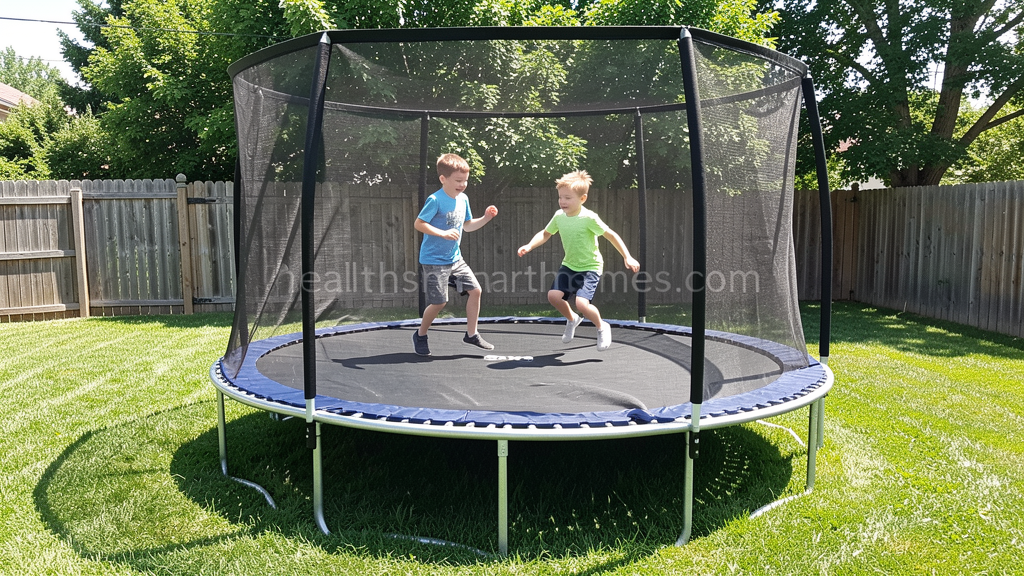
A 10-foot trampoline with net enclosure hits the sweet spot for most American families. It fits into standard suburban backyards without overwhelming the space, yet offers enough jumping area for one to three children to play safely. The included net enclosure dramatically reduces the risk of falls — the most common cause of trampoline-related injuries. According to the American Academy of Orthopaedic Surgeons, enclosure nets can prevent up to 90 percent of fall-related injuries when properly installed and maintained.
Brands like Skywalker, Zupapa, and JumpSport have refined their 10-foot models with reinforced net poles, UV-resistant jumping mats, and galvanized steel frames that resist rust for 5 to 10 years of outdoor use. If you are replacing a worn-out unit or buying your first trampoline, a 10-foot diameter with an integrated safety enclosure is the most practical choice for most households. If your yard only clears about 10 feet with room to spare, an 8ft trampoline with inflator in blue keeps the bounce while shrinking the footprint..
Key Features to Look for in a 10 ft Trampoline with Net
Frame Construction and Weight Capacity
The frame is the backbone of any trampoline. Look for galvanized steel tubing with a diameter of at least 1.5 inches and a wall thickness of 1.5 mm or more. Heavier-gauge steel resists twisting and bending under repetitive use. A quality 10 ft trampoline with net should support a minimum of 250 pounds — premium models from Skywalker and Zupapa offer up to 375-pound weight limits, accommodating both children and adults.
Spring System and Jump Performance
Spring count matters more than you might think. A typical 10 ft trampoline uses 72 to 96 springs, each measuring 5.5 to 7 inches in length. More springs generally mean a softer, more responsive bounce. Look for springs with a thick gauge (2.0 mm or heavier) and protective spring covers that shield jumpers from pinch points. Some models, like those from Skywalker, use rust-resistant galvanized springs that hold up better in humid climates.
Enclosure Net Design and Safety
The net enclosure is your family’s primary safety barrier. Three enclosure designs dominate the market:
- Straight poles with a standard net: The most common and affordable design. Poles attach to the frame and support a mesh net around the jumping surface. Nets typically stand 5 to 6 feet tall.
- Curved or arched poles: These push the net outward, creating more interior room at the top and reducing the chance of jumpers hitting the poles. Found on mid-range and premium models.
- No-gap enclosure: The net attaches directly to the jumping mat with zippers or continuous mesh, eliminating the dangerous gap between the mat and the net. This is the safest design and is used by brands like JumpSport and Skywalker.
Mesh quality matters too. UV-resistant polypropylene netting lasts 2 to 4 years longer than standard polyethylene. Look for nets with small weave openings (under 2 inches) so small hands and feet cannot get caught.
Jumping Mat and Padding
The jumping mat — the part you actually bounce on — should be made of UV-resistant polypropylene or PermaNet material. A well-made mat resists stretching and fading for 3 to 5 years of regular use. The edge padding that covers the springs should be at least 1 inch thick and weather-resistant. Thicker padding (1.5 to 2 inches) found on Zupapa and Skywalker models provides better impact protection if a jumper lands near the edge.
Best 10 ft Trampoline with Net in 2026: Top Picks
1. Skywalker Trampolines 10-Foot Round Trampoline with Enclosure Net
The Skywalker 10-foot round trampoline is the most popular model in this size category. It features a galvanized steel frame with a 300-pound weight capacity, 72 rust-resistant springs, and a no-gap enclosure design that eliminates pinch points. The frame includes a patented T-socket connection that adds structural rigidity compared to standard triangle-shaped brackets. Pricing ranges from $280 to $350 depending on the retailer. Skywalker backs this model with a 5-year frame warranty and a 1-year warranty on the mat and padding. Check price on Amazon →
2. Zupapa 10 ft Trampoline with Net Enclosure
Zupapa has built a strong reputation for heavy-duty construction at a reasonable price point. Their 10-foot model uses a 1.5 mm galvanized steel frame with a 375-pound weight capacity — one of the highest in this size class. The trampoline uses 96 springs (6 inches long) for a smooth, responsive bounce. The enclosure features arched poles with foam padding and a UV-resistant mesh net. Prices range from $350 to $450. Zupapa offers a 5-year warranty on the frame and 2 years on the mat and net. Check price on Amazon →
3. JumpSport 10-Foot Trampoline with Patented Safety Enclosure
JumpSport pioneered the no-gap enclosure system, which remains the safest net design on the market. Their 10-foot model uses a powder-coated steel frame rated for 250 pounds, with 84 springs and a PermaNet UV-resistant jumping mat. The net is 6 feet tall — taller than most competitors — and uses JumpSport’s patented iMesh net suspension that maintains tension without sagging. Expect to pay $500 to $650, reflecting the premium safety engineering. JumpSport provides a 5-year frame warranty and 90-day coverage on pads and nets. Check price on Amazon →
4. HEDSHE 10 ft Trampoline with Safety Enclosure Net
For budget-conscious families, the HEDSHE 10-foot trampoline delivers solid performance for under $250. It uses a 1.3 mm galvanized steel frame with a 250-pound capacity, 60 springs, and a standard straight-pole enclosure design. The jumping mat is UV-protected polypropylene, and the edge padding is 1 inch thick. While it lacks the heavy-duty feel of Skywalker or Zupapa, it is a viable option for lighter use with smaller children. Warranty coverage is limited to 1 year on the frame.
5. Upper Bounce 10-Foot Round Trampoline with Enclosure
Upper Bounce offers a 10 ft trampoline with net that strikes a good balance between price and quality. The frame uses 1.5 mm galvanized steel with a 300-pound capacity, and the 84 springs deliver a responsive bounce. The enclosure uses curved poles for extra interior space, and the net measures 5.5 feet tall. Pricing falls in the $300 to $400 range. Upper Bounce includes a 3-year frame warranty and a 1-year warranty on components. Check price on Amazon →
How to Set Up Your 10 ft Trampoline with Net
Assembly is typically a 2-person job that takes 60 to 90 minutes. Here is a step-by-step overview:
- Choose a level spot — Clear a flat area at least 12 feet in diameter. Remove rocks, roots, and debris. Some homeowners pour a concrete anchor base or use ground stakes for extra stability.
- Assemble the frame — Connect the galvanized steel sections according to the manual. Brands like Skywalker use color-coded T-sockets to simplify this step.
- Attach the springs — Use the included spring tool to hook each spring to the jumping mat and the frame. Work in opposite pairs to maintain even tension across the mat.
- Install the enclosure poles — Slide the foam-padded poles into the pole sleeves on the frame. On curved-pole models like Zupapa, make sure the arch faces outward.
- Hang the net — Attach the enclosure net to the poles using the straps or clips provided. Close any zippered entrances securely.
- Add edge padding — Lay the foam padding over the springs and secure it with the attached straps. This protects jumpers from landing on metal components.
For detailed assembly instructions, check out our guide on best round outdoor trampolines, which includes setup tips for several popular models.
Safety Tips for Your 10 ft Trampoline with Net
Even with a quality enclosure, following basic safety guidelines is essential:
- Limit to one jumper at a time. According to the Consumer Product Safety Commission (CPSC), 75 percent of trampoline injuries involve multiple jumpers colliding. A single jumper rule cuts injury risk dramatically.
- Place the trampoline on level ground. An uneven surface stresses the frame and can cause the trampoline to tip during heavy use. Use a leveling kit if your yard has a slight slope.
- Anchor the trampoline. Wind can lift even a heavy 10-foot trampoline. Ground anchors or sandbags (for temporary setups) prevent tipping in gusts over 30 mph.
- Check the net and padding regularly. Inspect the enclosure for tears, the net poles for rust, and the edge padding for wear at least once a month during the jumping season.
- Remove the ladder after use. Young children have been injured climbing unsupervised onto trampolines. Store the ladder away when the trampoline is not in active use.
- Replace worn parts. The enclosure net should be replaced every 2 to 3 years in direct sunlight. UV exposure degrades polypropylene mesh, reducing its tear strength by up to 40 percent after 24 months of continuous sun exposure.
10 ft vs. Other Trampoline Sizes
How does a 10-foot trampoline compare to other common sizes?
- 8-foot trampoline: Best for toddlers and very small yards. Jumping surface is roughly 50 square feet. Weight limit typically 100 to 150 pounds. Good for ages 3 to 6.
- 10-foot trampoline: Ideal for most families. Jumping surface is about 78 square feet. Weight limit 200 to 375 pounds. Suitable for ages 5 to adult. Fits in a 12×12 foot area.
- 12-foot trampoline: Larger jumping area (113 square feet) but needs a 14×14 foot space. Better for teenagers and multiple jumpers (though single-jumper is safest).
- 14 to 16-foot trampoline: Maximum bounce area (154 to 200 square feet) but requires significant yard space. Best for older kids and athletic training. Read our guide on 16-foot trampolines for more on larger models.
Frequently Asked Questions
How much space do I need for a 10 ft trampoline with net?
You need a flat area at least 12 feet in diameter — the 10-foot trampoline itself plus 1 foot of clearance on each side for the enclosure net and safe entry. For overhead clearance, ensure at least 24 feet of vertical space free from tree branches, power lines, or roof overhangs. Plan on a total footprint of roughly 12 by 12 feet.
What is the weight limit for a 10 ft trampoline with net?
Weight limits vary by brand and model. Entry-level trampolines support 200 to 250 pounds, while premium models from Zupapa and Skywalker support up to 375 pounds. Always check the manufacturer’s specification before purchasing to ensure the trampoline can safely accommodate the intended users. Exceeding the weight limit voids the warranty and increases the risk of frame failure.
How long does a 10 ft trampoline with net last?
With proper maintenance, a quality 10-foot trampoline with net lasts 5 to 10 years. The galvanized steel frame is the most durable component and can last a decade or more. The jumping mat typically needs replacement after 3 to 5 years, and the enclosure net should be replaced every 2 to 3 years depending on sun exposure. Spring replacement may be needed after 3 to 4 years of heavy use.
Can adults use a 10 ft trampoline with net?
Yes, many 10-foot trampolines now support adult use. Models with weight limits of 300 pounds or higher — like the Skywalker (300 lbs) and Zupapa (375 lbs) — can safely accommodate adult jumpers. However, the 10-foot diameter provides less room for tall adults to jump comfortably compared to larger sizes. For regular adult fitness bouncing, consider a 12-foot or 14-foot model.
Is a 10 ft trampoline with net safe for a 5-year-old?
Yes, a 10-foot trampoline with net is safe for children aged 5 and up when used with adult supervision and the safety rules above. The enclosure net prevents falls, and the foam edge padding protects against spring contact. For children under 5, an 8-foot trampoline with a lower weight limit and shorter net height is a better fit.
