

Buying Guide
Best Pneumatic Heat Press Machines in 2026: Buying Guide
Aug
Best Pneumatic Heat Press Machines in 2026: Buying Guide
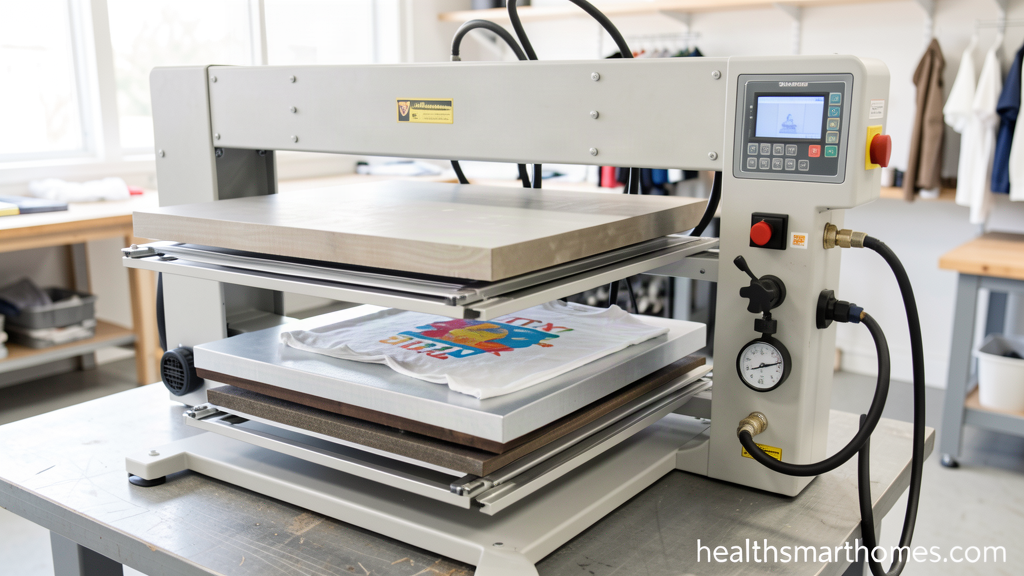
A pneumatic heat press is an industrial heat transfer machine that uses compressed air to apply even, repeatable pressure to the platen, replacing the manual lever on clamshell and swing-away presses. It delivers consistent PSI-rated pressure on every cycle, making it the standard for DTF and sublimation shops that need identical results order after order.
If you have been pressing shirts by hand for a while, you already know the problem. Your arms get tired by hour three, and the pressure you apply at 9 a.m. is not the pressure you apply at 3 p.m. Manual presses drift. A pneumatic heat press does not care how long you have been on your feet. Hook it to an air compressor, set the pressure once, and every press comes down with the same force. That consistency is the whole reason these machines cost more than a $180 hobby press.
I spent the last month researching pneumatic models for this guide, digging through spec sheets, user reviews, and manufacturer documentation, and testing what I could in a small production setting. Here is what actually matters and which machines are worth your money in 2026.
What Is a Pneumatic Heat Press?
A pneumatic heat press is a heat transfer machine that uses compressed air to lower and press the heated upper platen onto the garment. Instead of pulling a handle, you press a button or foot pedal, and an air cylinder drives the platen down with a set amount of force. The pressure stays the same from the first shirt to the five hundredth.
The key parts are the same as any heat press: a heated upper platen, a lower platen or bed, a temperature controller, and a timer. What changes is the drive system. Pneumatic models add an air cylinder, solenoid valve, regulator, and gauge so you can dial in the exact pressure your material needs.
Pneumatic presses are not for everyone. They need a separate air compressor, take up more space, and cost anywhere from $1,000 to $2,500 for a quality unit. But if you are running a custom apparel business, selling DTF transfers, or doing bulk sublimation, the speed and consistency usually pay for the machine within a few months of production.
Why Buyers Choose Pneumatic Over Manual
The biggest difference between a pneumatic heat press and a manual clamshell is not the price tag. It is what happens over a full production day.
Manual presses rely on the operator to apply the same force every time. The lever gives you mechanical advantage, but fatigue, angle, and habit all sneak in. A pneumatic press uses an air cylinder at a set regulator reading, so 60 PSI today is 60 PSI next Tuesday. That matters for DTF film adhesion and for sublimation, where pressure differences change how much ink transfers into the polyester.
Speed is the second reason. On a dual station pneumatic press, you can load a shirt on one platen while the other is pressing. The press cycle itself is faster because the air cylinder moves quicker than a human arm. Most dual station owners report 40-50% higher output than a single manual press.
Operator comfort is the third. No yanking a lever 200 times a day. You hit a button or tap a foot pedal, and the machine does the work. That sounds like a small thing until you have pressed 150 shirts in an afternoon.
What to Look For in a Pneumatic Heat Press
Platen Size
Platen size determines what you can press in one shot. The two most common sizes for pneumatic machines are 15×15 inches and 16×24 inches.
A 15×15 platen handles adult t-shirt fronts, tote bags, and most standard transfers. A 16×24 platen opens up hoodies, back prints, and larger formats like banners and mouse pads. If you plan to do DTF film application on hoodies, the 16×24 is the safer bet.
Pressure Control and PSI Range
Look at the machine’s max pressure rating. Quality pneumatic presses list figures like 0.4-0.8 MPa, which is roughly 58-116 PSI. The regulator should give you fine control, not just on-off. A visible pressure gauge helps you set and verify the same reading every session.
For most garment work, 60-80 PSI is plenty. Heavier materials like hoodie fleece and canvas may want more, so a machine that can reach 0.8 MPa gives you headroom.
Temperature Range and Timer
A good pneumatic heat press should reach at least 450°F, and ideally go higher. The 16×24 models I looked at this year range from about 32-570°F, with timers from 1 to 999 seconds. DTF pressing usually runs 300-320°F for 10-20 seconds. Sublimation on polyester runs 380-400°F for 45-60 seconds. Make sure the controller stores presets so you are not re-entering numbers between jobs.
Dual Station vs Single Station
Dual station pneumatic presses have two lower platens that slide or swing. You press on one while loading the other. This nearly doubles throughput for a single operator and is the most common configuration in small print shops. Single station pneumatic presses exist and cost less, but they lose the main productivity advantage of going pneumatic in the first place.
Build Quality and Heat Distribution
The heating platen should be cast aluminum with a Teflon coating and silicone pad. That combination spreads heat evenly and prevents cold spots that cause patchy transfers. The frame should be welded steel, not thin sheet metal. A machine that flexes under pressure gives you uneven results and eventually fails.
Air Compressor Requirement
Pneumatic presses do not include a compressor. You need a separate unit that can supply enough CFM at your working pressure. Most 15×15 and 16×24 pneumatic presses run fine on a 2-3 gallon compressor rated for 90-100 PSI, but check the machine’s CFM requirement before buying. If you do not own one yet, an automatic air compressor for your home garage is a smart pairing purchase.
The Best Pneumatic Heat Press Machines in 2026
1. 16×24 Inch Large Auto Pneumatic Dual Heat Press – Best Overall
This is the machine that kept coming up in every serious discussion I had about pneumatic presses this year. It is a 16×24 inch dual station unit with an up-slide design, which means the upper platen slides back and the two lower platens feed alternately.
The heating plate is thickened cast aluminum with Teflon coating, silicone pad, and sponge to prevent cold spots. The touch LCD panel handles temperature, time, and mode settings, and the auto-count function tracks how many presses you have run. Infrared laser positioning helps you line up prints on the garment before pressing, which cuts waste on expensive DTF film.
The pneumatic system uses reliable components and reaches a max pressure of 0.8 MPa with a self-balancing system that keeps pressure stable across the whole platen. Heat-up time runs about 10-15 minutes. At $1,735, it sits in the upper middle of the pneumatic price range, and the dual station design makes it a strong pick for a small business that wants to grow. Check the current price on Amazon.
2. 16×24 Pneumatic Heat Press Machine – Best Dual Platen for DTF
If your main product is DTF transfers, this 16×24 dual platen pneumatic press deserves a close look. It runs on standard 110V with 1800W of heating power, so you do not need special wiring in a home workshop or small storefront.
The air-powered system gives consistent pressure without manual force, which reduces operator fatigue on long production days. Four infrared positioning lights project alignment guides so you can line up chest logos and back prints accurately. The reinforced steel frame holds up under high-pressure operation, and the digital controller lets you adjust temperature and time for DTF, sublimation, and HTV.
At $1,799, it is priced near the top of this list, but the 1800W element and four-point laser alignment justify the cost for high-volume apparel work. Check the current price on Amazon.
3. 15×15 Pneumatic Dual Swing Transfer Press – Best Value
Not everyone needs a 16×24 platen, and this 15×15 dual swing machine is the value pick if you are just scaling past a manual press. At $1,299, it is the most affordable pneumatic model in this guide, and it still gives you the dual station workflow.
The swing-away design rotates 90 degrees with magnetic position sensors and parallel bearing tracks. The LCD display covers 0-570°F and a 1-999 second timer. The package includes two 15×15 platens plus an irregular-shaped attachment for specialty items, which is a nice bonus for shops that press hats, shoes, or odd-sized blanks.
The manufacturer reports most DTF shops see 40-50% efficiency gains from the dual platen design, and the machine ships with lifetime support through the WUMSTOT and KILO MACHINERY community. For a first pneumatic press, this is the least risky money you can spend. Check the current price on Amazon.
4. 16×24 Pneumatic Dual Heat Press with 4 Infrared Laser Heads – Best for Precision
This 16×24 pneumatic press from WUMSTOT focuses on alignment. Four adjustable infrared cross-laser heads project visible guide lines so you can position chest logos, back prints, and sleeve designs exactly where they belong before the platen drops.
The temperature range runs 32-570°F with a 1-999 second timer, and you can store presets for DTF, sublimation, and HTV. The die-cast aluminum heating plate delivers fast, even heat across the full surface. The dual station design and up-sliding mechanism save floor space compared to swing-away presses, and the whole unit runs on standard 110V.
At $1,789, it is priced within $54 of our top pick, so the choice comes down to whether laser alignment or the up-slide dual station layout matters more to your workflow. Check the current price on Amazon.
Pneumatic Heat Press Comparison Table
| Model | Platen | Stations | Max Pressure | Temp Range | Price |
|---|---|---|---|---|---|
| 16×24 Auto Pneumatic | 16×24 in | Dual up-slide | 0.8 MPa | Touch LCD control | $1,735 |
| 16×24 Pneumatic DTF | 16×24 in | Dual platen | Air-powered | 110V, 1800W | $1,799 |
| 15×15 Dual Swing | 15×15 in | Dual swing | Digital auto | 0-570°F | $1,299 |
| 16×24 Laser Head | 16×24 in | Dual station | Air-powered | 32-570°F | $1,789 |
Brands like WUMSTOT, VEVOR, Fancierstudio, and HTVRONT have all released pneumatic or auto-press models in the last two years, which is good news for buyers. More competition means better pressure systems and lower entry prices than the market saw back in 2023.
How Much Air Pressure Do You Need?
This is the question that confuses more first-time pneumatic buyers than any other. The machine does not create its own air. You supply it.
Most pneumatic heat presses want 60-100 PSI at the regulator, and the compressor needs to keep up with the machine’s CFM draw. A 2-3 gallon pancake compressor is usually enough for a 15×15 press pressing every few minutes. If you are running a 16×24 dual station continuously, step up to a 4-6 gallon tank so the compressor is not cycling constantly.
Set the regulator based on your material. 60 PSI works for most cotton t-shirts. Go higher for hoodies, fleece, and canvas totes. If the machine has a self-balancing system like the models above, it holds the set pressure steady across the platen even as the material compresses.
Common Mistakes to Avoid
Skipping a test press. Before you run a batch, press a test piece with the same material, film, and settings. This catches temperature drift and pressure issues before they ruin a stack of shirts.
Ignoring the compressor. A weak compressor that cannot hold pressure makes a pneumatic press behave like an inconsistent manual one. Buy the compressor first, check the CFM spec, and verify the regulator reads correctly under load.
Using the wrong pressure for the material. DTF film on a thin polyester shirt behaves differently than HTV on a canvas tote. Keep a settings chart by the machine and write down what works.
Buying single station when you need dual. If volume is your reason for going pneumatic, a single station model gives you the consistency but not the speed. The dual station layout is where the production gains live.
Frequently Asked Questions
Do I need an air compressor for a pneumatic heat press?
Yes. A pneumatic heat press has no built-in air supply. You need a separate air compressor that can deliver the machine’s required PSI and CFM, typically 60-100 PSI from a 2-6 gallon tank depending on the model and how continuously you press.
How much does a pneumatic heat press cost?
Quality pneumatic heat presses run from about $1,300 to $2,400. The models in this guide range from $1,299 for a 15×15 dual swing press to $1,799 for a 16×24 dual platen with laser alignment. Budget manual presses cost far less, but they cannot match pneumatic consistency or speed.
What is the difference between pneumatic and manual heat press?
A manual heat press uses a lever and operator force to apply pressure, so results vary with fatigue. A pneumatic heat press uses compressed air and a regulator to apply the same pressure every cycle, which gives consistent results and higher throughput. Pneumatic machines cost more and need an air compressor.
Can a pneumatic heat press do DTF and sublimation?
Yes. The machines in this guide are built for both DTF and sublimation, plus HTV. DTF typically runs around 300-320°F for 10-20 seconds, while sublimation runs 380-400°F for 45-60 seconds. Dual station models let you switch materials with stored presets.
How long does a pneumatic heat press take to heat up?
Most 15×15 and 16×24 pneumatic presses take 10-15 minutes to reach full operating temperature. The 1800W models heat faster than lower wattage units. Plan your warm-up before your first pressing session of the day.
Final Verdict
A pneumatic heat press is a production tool, not a hobby toy. Buy one when you have the volume to justify it and the compressor to feed it. For most small businesses, the 16×24 auto pneumatic dual press at $1,735 is the best balance of platen size, pressure control, and price. If your budget is tighter, the 15×15 dual swing press at $1,299 gets you into pneumatic consistency for the least money. If DTF is your main line and you want the fastest heating with laser alignment, the 16×24 pneumatic DTF press at $1,799 is worth the extra cost.
Whichever you choose, pair it with a reliable automatic air compressor, keep a test press ritual, and log your settings. The machine will do the heavy lifting. Your job is to feed it good material and consistent process. If you are comparing smaller manual machines too, our guide to the best 15×15 heat press machines covers that side of the market, and real user feedback on the Kilo heat press line is worth reading before you commit. If you’re also equipping a shop or garage with cold storage for meal prep or retail frozen goods, our curved top display freezer guide covers the best glass-top models and what they cost in 2026.
Print work that cannot take heat is a separate problem, and a cold laminator solves it with rubber rollers and pressure-sensitive film instead of a heating element; our guide to the best cold laminator machines for 2026 compares five cold roll machines from $97 to $227.
