

Buying Guide
Best Curved Top Display Freezers in 2026: Buying Guide
Aug
Best Curved Top Display Freezers in 2026: Buying Guide
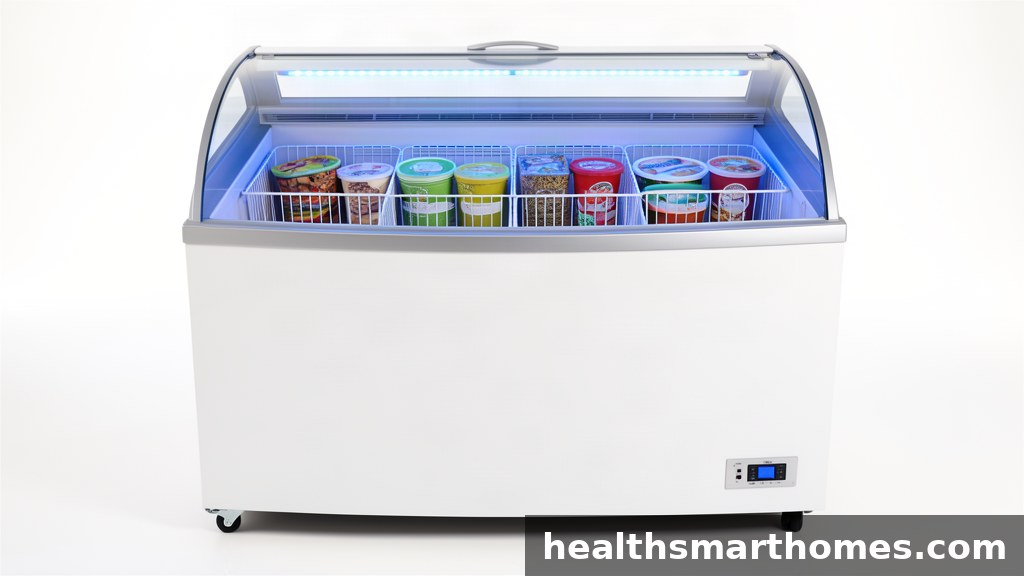
A curved top display freezer is a chest-style commercial freezer with a curved glass lid that lets shoppers see frozen goods without opening the door, combining storage capacity with retail-style merchandising for ice cream, frozen meals, and bulk groceries.
Walk into any convenience store and the ice cream case near the register is probably a curved top display freezer. There’s a reason stores use them: the curved glass lid pulls people in, keeps cold air trapped, and shows off what’s inside. For a home setup, they do the same job in a garage, a finished basement, or a home gym fuel corner where you keep frozen meal prep. This guide covers what actually matters when you buy one, what you can expect to pay, and the one model I’d start with in 2026.
Why Buy a Curved Top Display Freezer?
Standard chest freezers hide everything under a flat lid. A curved top display freezer uses a domed glass top instead, so you can see the contents at a glance. That matters more than you might think. You stop digging through frostbitten mystery containers, you notice when you’re low on staples, and you’re not lifting a heavy flat lid every time someone wants a popsicle.
The glass lid also creates a merchandising effect. If you sell food from home, run a small cafe, or host a lot of family gatherings, the display factor is real. The same freezer that stores your batch-cooked meals doubles as a point-of-sale case.
One thing to be honest about: they cost more than a plain chest freezer of similar size. The tempered curved glass, the interior lighting, and the fan-forced cooling all add to the price. You pay a premium for visibility, and for most buyers that premium is worth it.
What to Look For in a Curved Top Display Freezer
Capacity: Match It to Your Household
Capacities run from about 3.5 cubic feet up to 15 cubic feet and beyond. A 5-cubic-foot unit holds roughly 175 pounds of food, which suits a couple or a small family. The 12.5-cubic-foot class is the sweet spot for bigger households and anyone serious about meal prep, holding roughly 400 pounds. Before you buy, measure the space you plan to use. A 12.5-cubic-foot model typically needs a footprint around 48 inches long, 28 inches deep, and 33 inches tall, so it’s not a corner-of-the-kitchen machine.
Temperature Control and Range
Look for an adjustable thermostat rather than a fixed setting. Good models let you dial from about 0°F to 32°F. Ice cream needs to sit near 0°F to stay scoopable instead of rock-hard or soupy, while frozen meats and vegetables are fine a few degrees warmer. A digital temperature readout is a nice-to-have, but a reliable dial thermostat with a clear range does the job on budget models.
Glass Quality and Anti-Fog Design
The lid is the whole point, so the glass matters. Tempered curved glass is the standard and it’s strong, but check whether the unit has an anti-fog feature. Without it, condensation builds up on warm days and you’re wiping the lid constantly. Some models add a heated glass option for high-humidity spaces, which costs more to run but keeps the display clear year-round.
Baskets and Interior Layout
Wire baskets turn a deep chest into an organized one. A 12.5-cubic-foot model with four wire baskets lets you separate ice cream, meat, vegetables, and backup snacks instead of layering everything into one frozen pit. Baskets that slide on rails beat baskets that just sit on top of the food, since you can reach the bottom layer without unloading everything.
Mobility and Leveling
These units are heavy, often 150 pounds or more empty. Locking casters are a genuine feature, not a gimmick: you can roll the freezer out to clean behind it and lock it in place so kids can’t move it. If a model only has fixed feet, plan where it’s going permanently, because you won’t want to move it twice.
What You’ll Pay in 2026
Pricing splits into three tiers:
- Budget, under $700: Smaller 3.5 to 5.5 cubic foot units with dial thermostats and no interior lighting. Fine for a garage or laundry room.
- Mid-range, $700 to $1,200: The 7 to 12.5 cubic foot sweet spot, with LED lighting, casters, and better insulation. This is where most home buyers should land.
- Commercial, $1,200 to $2,500: Larger capacities, heated anti-fog glass, stronger compressors, and warranty packages designed for daily retail use.
Watch the fine print on energy use. Fan-forced cooling and glass lids use more electricity than a plain chest freezer, and an Energy Star rating can save you $30 to $60 a year depending on your rates. If the unit runs in an unconditioned garage, budget for higher consumption in summer months.
Top Pick for 2026: The 12.5 Cubic Foot Commercial Angle Model
My top pick for most buyers is the Commercial Angle Curved Top Chest Freezer with glass top, a 12.5-cubic-foot white unit with four wire baskets, an adjustable thermostat, and locking casters. It’s the model that hits the balance between home practicality and commercial display, and it’s the one I keep coming back to when people ask what to buy first.
Why it works: the 12.5-cubic-foot capacity covers a family’s meal prep and then some, the four baskets keep everything organized, and the locking coasters make placement painless. The adjustable thermostat covers the 0°F to 32°F range you need for ice cream and frozen food alike. At this size it’s too big for a kitchen, but it’s right at home in a garage, basement, or utility room.
If you’re ready to buy, check the current price on this curved top display freezer on Amazon. Prices on these units move with freight and season, so the listing is the reliable number to look at.
Brands Worth Knowing
Not all curved top display freezers are the same under the hood. ORIKOOL and Avantco are the value-oriented names in commercial refrigeration, offering solid compressors and competitive pricing. EdgeStar and Koolatron cover the consumer side with smaller footprints and friendlier price tags. At the premium end, Turbo Air and True Manufacturing build the units you see in actual stores, with beefier compressors, better warranties, and prices to match. For a home buyer, the first three are where you’ll find the best value; True and Turbo Air make sense only if you’re running a real business.
How to Choose and Set Up Your Freezer
Follow these steps and you’ll avoid the common mistakes:
- Measure your space including clearance for the lid to open fully, since a curved glass lid needs more overhead room than a flat one.
- Decide capacity by household size: 5 cubic feet for up to two people, 7 to 10 for a family of four, 12.5 or larger for serious meal preppers.
- Check the door swing and casters before ordering, and confirm the unit can pass through your doorways and down any stairs.
- Let it stand before plugging in. After transport, wait 3 to 4 hours so the refrigerant settles, then plug in and set the thermostat to about 0°F.
- Test temperature for 24 hours with a separate thermometer before loading food. If it holds steady near 0°F, load it up.
- Keep it at least 2 inches from the wall so the compressor gets airflow, and clean the condenser coils every 6 months.
Routine care is simple. Defrost before ice builds past half an inch, wipe the glass with a non-abrasive cleaner, and check the door seal seasonally. A well-maintained curved top display freezer should run for a decade or more; most brands back the compressor with a five-year warranty and the rest of the unit for one year.
Frequently Asked Questions
Is a curved top display freezer worth it for home use?
If you meal prep, stock bulk frozen food, or sell anything frozen from home, yes. The visibility cuts food waste and the capacity handles serious volume. If you just need a basic freezer for leftovers, a flat-lid chest freezer costs less and uses less energy.
Can I store ice cream in a curved top display freezer?
Yes, and that’s one of the main uses. Set the thermostat near 0°F and the glass top shows you exactly what’s inside without opening the lid and letting cold air escape.
How much electricity does a curved top display freezer use?
Expect a mid-size unit to draw roughly 200 to 350 kWh per year, more than a plain chest freezer of the same capacity because of the glass lid and fan cooling. Energy Star models are the efficient end of that range.
Can I use one in an unheated garage?
You can, as long as the garage stays above freezing. If ambient temperature drops below about 32°F, the freezer’s thermostat can stop calling for cooling and food may thaw. In cold climates, keep the unit indoors or in a conditioned space.
Final Thoughts
A curved top display freezer is a bigger purchase than a standard chest freezer, but the visibility, organization, and display factor earn the extra cost for most families. Aim for the 7 to 12.5 cubic foot range, prioritize an adjustable thermostat and casters, and don’t skip the 3-to-4-hour rest before first power-up.
For most households, the 12.5-cubic-foot commercial angle model with four baskets and locking coasters is the one to beat in 2026. Compare the current listing price on Amazon before you commit, and check out our other buying guides if you’re also upgrading your home setup, like this roundup of pneumatic heat press machines or our picks for 7-piece luggage sets for travel season.
If your freezer lives in a home gym or garage setup, you might also browse the full healthsmarthomes.com shop for equipment that fits the space you’re working with.
