

Buying Guide
Best Outdoor Trampoline for Adults in 2026: 5 Heavy-Duty Picks Rated to 450 lbs
Sep
Best Outdoor Trampoline for Adults in 2026: 5 Heavy-Duty Picks Rated to 450 lbs
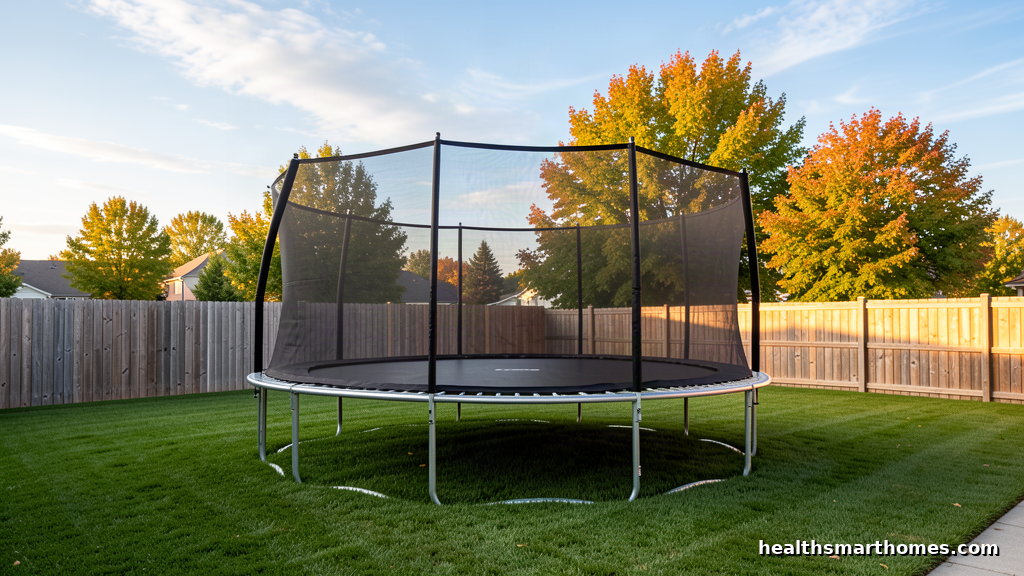
An outdoor trampoline for adults is a backyard trampoline rated for at least 250 pounds of single-user weight, built on a galvanized steel frame with a UV-treated mat and a full safety enclosure. Only the single-jumper rating matters, since a bouncing adult lands with two to three times their body weight in force.
What an Adult-Rated Outdoor Trampoline Needs
Walk the trampoline aisle at any big-box store and you will find rows of 8- and 10-foot models rated for 150 to 220 pounds. Those are kid trampolines. They bounce well, they cost $150 to $250, and an adult who lands on one repeatedly will stretch the mat, flatten the springs, and eventually bend the frame legs.
Three specifications separate an outdoor trampoline an adult can use year after year from one that will sag by the second summer.
Single-user weight rating of 250 pounds or more. The ASTM F381-16 protocol most US trampolines follow awards a user weight based on repeated drop tests, and plenty of companies advertise four times that figure as proof of strength. A 15-foot Skywalker carries a 275-pound maximum recommendation while noting the frame was tested to four times its 200-pound ASTM user weight. The recommendation is the number to trust.
A structural rating well above the user limit. Zupapa publishes 1,800 pounds of total capacity on its no-gap frames, ACON tests the Air 16 HD past 1,650 pounds, and Avyna rates the Pro-Line 10×17 at 1,750 pounds. High structural capacity is what keeps a 220-pound jumper from feeling the mat bottom out on landing.
Springs and mat sized for the load. A 14-foot ARMY VANCA carries 80 springs, the 15-foot Skywalker round uses 96, and Zupapa’s 15-foot Saffun runs 108 galvanized 7-inch springs. Spring count alone does not decide bounce quality, but a mat hung on fewer than 70 springs will feel dead under an adult.
Single-User Rating vs Structural Capacity
The two numbers get mixed up constantly, including in product titles. The single-user rating is a safety limit for one person bouncing at a time, and exceeding it wears the mat out early and voids your warranty. The structural capacity is the static load the frame and legs tolerate before deforming, and it usually comes from lab testing rather than a standard.
A trampoline with a 450-pound single-user rating and a 1,500-pound structural rating is stronger than one advertising a 1,200-pound capacity with no per-jumper figure listed. If you weigh 200 pounds and plan to jump rather than sit, look for 300 pounds or higher. Above 250 pounds, narrow the list to the rectangular training frames and the heavy-duty round models from Zupapa, Jumpflex, and Jumpzylla.
Size and Shape: How Much Yard a 14-Foot Trampoline Eats
A 14-foot round trampoline measures 168 inches across, and the enclosure poles and spring pads push the real footprint to roughly 17 by 19 feet of open yard. A 16-foot model needs 19 to 21 feet, which our 16-foot trampoline guide breaks down by family size. Add two feet of clearance on every side for the ladder and falling room, and keep the whole thing at least 10 feet from fences, sheds, and tree limbs.
Round trampolines pull jumpers toward the center, which makes them forgiving for casual bouncing and gives the best bounce per dollar. Rectangular frames spread the same spring energy evenly, so gymnasts and anyone working on flips gets a predictable landing zone at every point on the mat. Square models sit between the two. For a family that mostly wants safe, low-stress bouncing, round is the value pick; for adults who want to train, a 10×17-foot rectangle is worth the extra $1,500. If you are weighing shapes, our roundup of the best round outdoor trampolines and this 10 ft trampoline with net guide cover the two most common backyard sizes.
Frame height matters too. Most round backyard trampolines sit at about 2.9 feet with a 6-foot enclosure net, which puts the top of the net around 9 feet. If you have low branches or a garage overhang, measure before ordering. Two of the most common return reasons on these frames are a yard that fits the mat but not the net, and a gate that cannot swing past the ladder.
Frame, Springs, and Mat Specs Worth Paying For
Galvanizing is the first thing to check. Hot-dip galvanized tubing with zinc applied inside and out resists rust for a decade or more in humid climates. Powder-coated-only frames look better in year one and show rust at the leg joints by year three. Jumpzylla, ORCC, Goplus, and Zupapa all use galvanized steel on their adult-capacity models.
Springs should be galvanized spring steel, 5.5 to 10 inches long. Longer springs mean a softer, deeper bounce; shorter springs feel firmer. Premium rectangular frames such as the ACON Air 16 HD run 140 ten-inch springs, which is why they cost three to five times a mid-range round model.
The mat should be UV-treated polypropylene with reinforced V-ring or looped-strap attachment. Cheaper mats use stitched D-rings that tear at the seam. The ASTM safety ratings explained here are worth reading before you buy, since the enclosure and pad quality varies more than the frame specs do.
Warranty tells you what the maker expects the frame to survive. Zupapa backs its frame for 10 years, Jumpflex HERO for 10 years, AlleyOOP and Avyna for life on the frame, and Jumpzylla for one year across the board. A one-year warranty on a $500 trampoline is a signal about the frame, not a paperwork quirk.
The 5 Best Outdoor Trampolines for Adults in 2026
These five cover the range from a $280 first trampoline to a $900 training frame. Every one carries a single-user rating of 275 pounds or higher, and prices reflect listings at the time of writing.
1. Zupapa 1800LBS No-Gap Double Frame (Best Overall)
Zupapa’s double-frame build carries 1,800 pounds of total capacity, curved enclosure poles that keep the net out of the landing zone, and a patented no-gap design that sews the net directly to the mat so there is no gap for a foot to find. The frame is covered for 10 years, with 2 years on the mat, pad, net, ladder, and springs. Sizes run 12 to 16 feet, and the 15-foot version sits around $522. It is the pick for a household where a 200-plus-pound adult and two kids share the same trampoline.
Check the Zupapa 1800LBS No-Gap trampoline on Amazon
2. Jumpzylla 14/15/16 FT with Enclosure (Best Value)
Jumpzylla sells one frame design across six sizes, ASTM-compliant, with a galvanized steel frame, a non-slip ladder, and a 450-pound single-user rating on the 14-, 15-, and 16-foot models. Ratings sit at 4.4 stars across more than 6,000 reviews, which is high for this category. The 14-foot lists near $490 and the 16-foot near $550. Assembly takes two people about 90 minutes, and reviewers consistently note that a 14-foot model fits four kids with room for an adult to join.
Check the Jumpzylla outdoor trampoline on Amazon
3. ARMY VANCA 14 FT Heavy Duty Yard Trampoline (Best Under $300)
Eighty springs, ASTM approval, a rust-resistant galvanized frame, and a 450-pound maximum weight recommendation for about $280. The 14-foot size is the sweet spot here: big enough for an adult to bounce without feeling the mat bottom out, small enough to fit a standard suburban yard. Buyers report assembly with two adults in under two hours, and the seller ships replacement parts quickly when a box arrives damaged.
Check the ARMY VANCA 14 FT trampoline on Amazon
4. ORCC 1200LBS Weight Capacity (Best Frame for Humid Climates)
ORCC hot-dip galvanizes its tubing, adds a non-slip ladder and wind stakes, and rates the frame at 1,200 pounds with a 450-pound per-jumper recommendation. The 14-foot is around $320. If you live somewhere with summer humidity or a rainy season, the hot-dip process is the difference between a frame that lasts eight years and one that lasts three.
Check the ORCC 1200LBS trampoline on Amazon
5. Skywalker Jump N’ Dunk 15 Ft Rectangle with Hoop (Best for Families with Teens)
Skywalker’s 1,000-pound capacity rectangle ships with a no-gap enclosure and a breakaway-rim basketball hoop, which is what turns a trampoline into the thing your teenagers actually use. The rectangle bounce is even across the whole mat. Expect around $700 to $900 depending on the season, and plan on two or three hours of assembly.
Check the Skywalker Jump N’ Dunk 15 Ft trampoline on Amazon
Comparison Table: Adult-Rated Outdoor Trampolines
| Model | Size | Single-User Rating | Structural Capacity | Frame Warranty | Typical Price |
|---|---|---|---|---|---|
| Zupapa 1800LBS No-Gap Double Frame | 12-16 ft round | Not published per jumper | 1,800 lbs | 10 years | ~$522 |
| Jumpzylla with Enclosure | 14-16 ft round | 450 lbs | ASTM F381-16 certified | 1 year | $490-$550 |
| ARMY VANCA Heavy Duty Yard | 14 ft round | 450 lbs | 80 springs, ASTM approved | 1 year | ~$280 |
| ORCC 1200LBS Weight Capacity | 14 ft round | 450 lbs | 1,200 lbs | 1-2 years | ~$320 |
| Skywalker Jump N’ Dunk Rectangle | 15 ft rectangle | 275 lbs (round version) | 1,000 lbs | 1-3 years | $700-$900 |
| Jumpflex HERO 14 ft | 14 ft round | 350 lbs | 550 lbs | 10 years | $700-$1,000 |
| Vuly Thunder Pro | Round, multiple | 330 lbs | 1,650 lbs | 10 years | $1,000-$2,000+ |
Round Models Under $400 Worth a Look
If your yard is small or your budget is tight, the Goplus 8FT and 10FT frames use hot-dip galvanized technology and carry a 400-pound bearing rating with an enclosure and a non-slip ladder. They suit a single adult or a pair of younger kids.
Check the Goplus 8FT outdoor trampoline on Amazon
The VEVOR 14-foot is another option at about $390, with a 450-pound load capacity, 72 springs, and four U-shaped legs. The zinc coating is thinner than ORCC’s, so treat it as a five-to-seven-year frame rather than a ten-year one.
How to Set Up a 14-Foot Outdoor Trampoline in One Afternoon
Plan on 90 minutes to two hours with two adults. Do not assemble the frame on a slope and then try to move it.
- Pick and level the site. Choose a 17 by 19-foot patch of level ground with 2 feet of clearance on all sides, at least 10 feet from fences and tree limbs, and clear of sprinkler heads and buried cable. Rake the area and remove rocks and roots.
- Lay out the frame ring and connect the legs. Assemble the top ring in sections on the ground, then attach the leg bases so the frame sits flat. Check level in both directions and shim with pavers if needed.
- Attach the mat, then the springs. Hook the mat to the frame at the 12, 3, 6, and 9 o’clock positions first, then work around in opposing pairs so tension builds evenly. Wear gloves; a spring hook under load will bite.
- Fit the spring pad and the enclosure. Lay the pad over the springs and mat edge, then raise the enclosure poles and hang the net so the door lines up with your ladder. Curved poles should bow outward, away from the jumping surface.
- Anchor the frame. Drive the wind stakes or screw-in anchors at each leg, then check the hardware again after a week of bouncing and once a season after that.
- Bounce-test with an adult first. Land flat-footed in the center a few times and listen for creaks at the joints before letting kids on.
Anchoring, Winter Storage, and Frame Life
Wind is the most common way a backyard trampoline leaves the ground. A 14-foot round model weighs around 120 to 190 pounds and presents a solid face to a gust, so anchors are not optional once the frame lives outside year-round. Screw-in earth anchors at every leg beat stakes in loose soil, and a few hundred pounds of sandbags on the frame rails will hold a mat down through a storm warning.
In cold climates, pull the mat and springs inside before the first hard freeze. Ice in the mat’s weave stretches the polypropylene, and freeze-thaw cycles at the leg joints are what crack powder-coated frames. If you have to leave it up, remove the net, loosen the springs two turns, and cover the frame.
Tighten every bolt at the start of the season, replace any spring that shows rust at the hook, and wash the mat with mild soap and a hose rather than a pressure washer. A $500 trampoline cared for this way will outlast two cheap ones, which is the whole argument for buying an adult-rated frame in the first place.
Where a Trampoline Fits a Home Gym Routine
Ten minutes of steady bouncing works the same cardio systems as a short jog, with far less impact through the knees and hips, which makes a backyard trampoline a workable low-impact option for anyone who has given up running. Pair it with resistance work and you have a complete program that never needs a gym membership. If you are building out the indoor half of that setup, our guide to the best weight benches for home gyms covers the strength side, and our picks for the best walking pad treadmills work well for the rainy weeks when the trampoline is out of commission. Families setting up a full backyard should start with our kid-friendly backyard guide, which covers trampolines, bikes, and safe play zones together.
Quick Answers for Outdoor Trampoline Buyers
Do adults fit on a round trampoline? Yes, on a 12-foot model or larger with a 250-pound-plus single-user rating. A 14-foot round trampoline gives one adult a comfortable bounce zone and two kids plenty of room.
What weight capacity should an adult trampoline have? At least 250 pounds for a single jumper, and 300 pounds or more if you weigh over 200 and plan to bounce actively. Ignore the total capacity number unless the listing also states a per-jumper limit.
How long do these frames last? Ten-plus years for hot-dip galvanized or 11-gauge frames from Zupapa, Jumpflex, or Avyna. Three to five years for the $150 to $250 kid models that parents hand off when an adult starts using them.
Is a rectangular trampoline better for adults? For training and gymnastics, yes. Rectangular frames hold even tension across the mat and cost $700 to $3,500. For casual family bouncing, a round model delivers most of the fun at a third of the price.
